

Preventing Digital Fatigue in Hybrid Work
May 2024
Categories: Lifestyle & Wellbeing / Business
Tags: hybrid work, wellbeing, digital fatigue, lifestyle, productivity
By David
Hybrid working in the UK has matured into a professional ecosystem, but the human element remains critical. Flexibility, advanced technology, and garden offices provide incredible benefits, yet the risk of digital fatigue, burnout, and work-life imbalance is higher than ever, particularly for first-time remote workers entering this new world. This month, we explore practical strategies for sustaining wellbeing while maximising productivity.
Understanding Digital Fatigue
Digital fatigue occurs when employees spend extended hours on video calls, instant messaging platforms, and project management tools. For hybrid professionals, the challenge is compounded by the need to constantly switch between home, garden offices, and occasional office presence.
First-time remote workers are particularly susceptible. Without established routines, boundaries, or experience managing multiple digital channels, the demands of constant online engagement can quickly lead to stress, mental exhaustion, and reduced focus.
Technology enables hybrid work, but over-reliance without boundaries erodes wellbeing and professional performance.
Structuring a Sustainable Workday
Wellbeing in hybrid work begins with deliberate routine design. Experienced hybrid employees often establish fixed start and finish times, scheduled breaks, and defined periods for focused work. First-time remote workers benefit from explicit guidance on how to structure the day. Key strategies include:
- Dedicated workspace: Whether a garden office or home study corner, physical separation helps signal “work mode” and “personal mode.”
- Scheduled breaks: Short, regular intervals away from screens improve concentration and reduce fatigue.
- Time-blocking: Assigning periods for deep focus, collaboration, and admin prevents multitasking overload.
- Digital hygiene: Limiting notifications, using “do not disturb” modes, and batching communication reduce cognitive load.
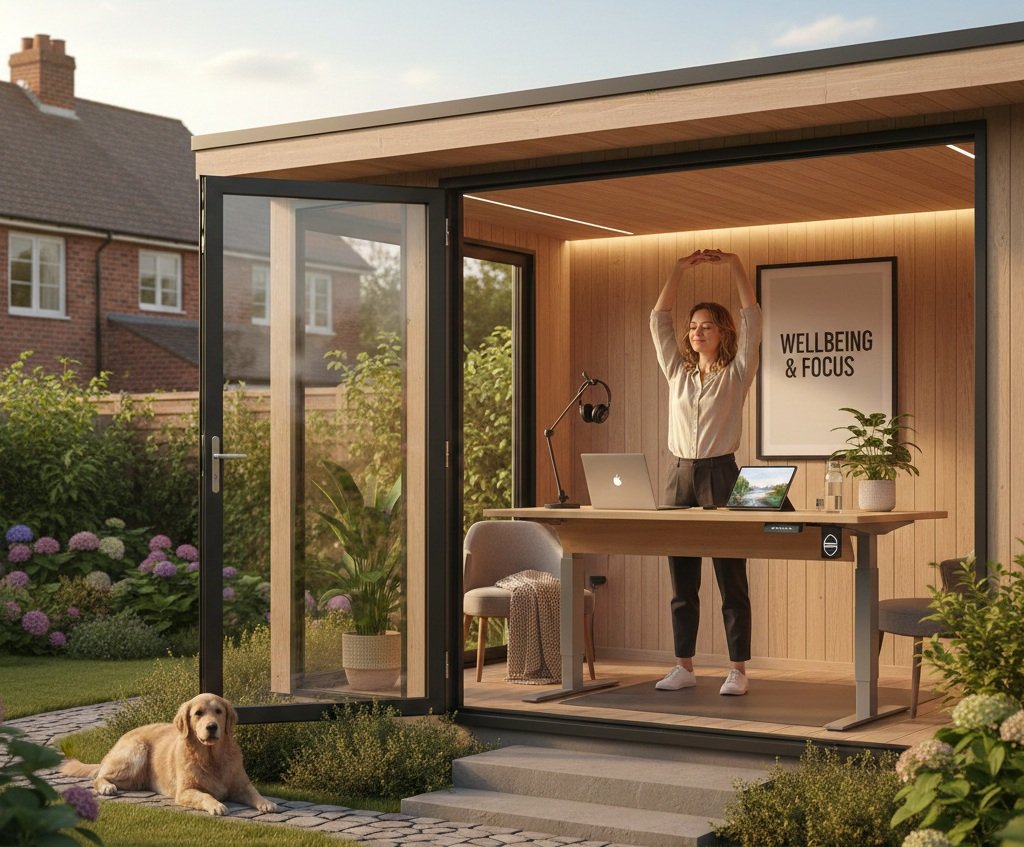
Garden offices equipped with smart technology, adjustable lighting, and ergonomic furniture amplify these benefits, supporting focus and physical comfort.
Lifestyle Practices for Hybrid Wellbeing
Beyond the workday, hybrid professionals are finding that lifestyle integration is critical. Practices include:
- Physical activity: Walks, stretching, or home workouts counter sedentary habits
- Healthy eating and hydration: Proper meals sustain energy during remote work
- Mindfulness and mental breaks: Short meditation, journaling, or reflection periods improve resilience
- Separation rituals: Activities marking the end of the workday — shutting devices, moving away from the workspace — reinforce boundaries
For newcomers to remote work, cultivating these habits early accelerates adaptation and builds sustainable routines.
Employer Support and Community
Organisations in 2024 recognise that wellbeing is integral to performance. Support measures include:
- Guidance on ergonomics and workspace setup
- Access to wellness apps, counselling, or coaching services
- Regular check-ins to monitor stress, workload, and engagement
- Encouraging peer support networks and hybrid communities
Communities, both internal and external, help first-time remote workers gain confidence, share best practices, and maintain a sense of connection, reducing isolation and digital fatigue.
Technology as an Enabler, Not a Stressor
Advanced tools that were introduced for productivity — AI-assisted scheduling, collaboration platforms, VR/AR meetings, and smart garden office systems — must be balanced against the risk of continuous connectivity. Training on effective tool usage and boundaries ensures technology remains an enabler rather than a source of exhaustion.
Wellbeing in hybrid work is a combination of space, routines, technology, and human awareness.
Looking Ahead
Hybrid work in 2024 offers unprecedented flexibility, productivity, and professional growth. But success depends on sustainable practices that protect employee health and wellbeing. Organisations that invest in guidance, smart workspaces, and community support create resilient teams. Employees, especially those new to remote work, who adopt structured routines, manage technology wisely, and prioritise health, will thrive professionally while avoiding burnout.
Digital fatigue is not an inevitable cost of hybrid work — it is a challenge that can be managed with awareness, structure, and support.