


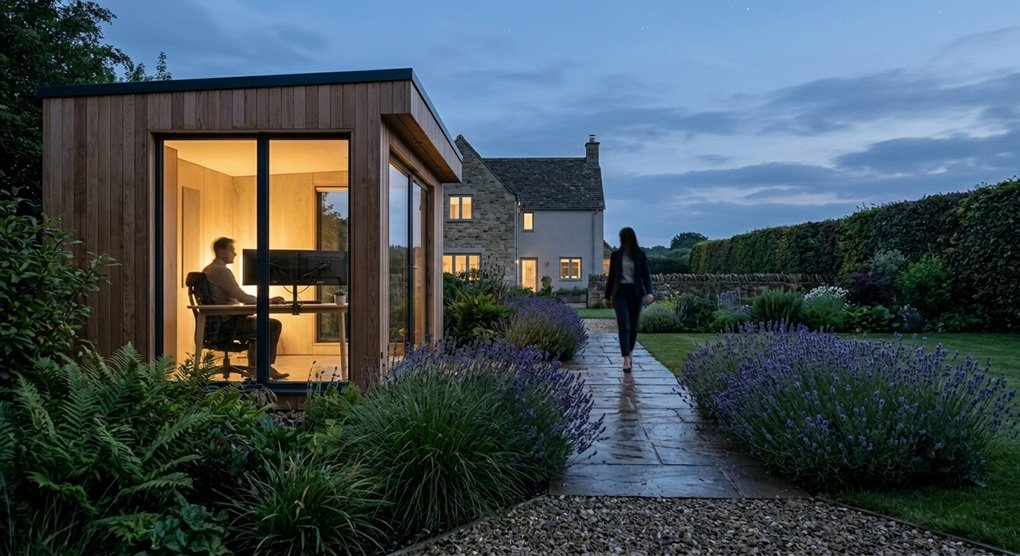
Mastering the Psychological Boundary of the Garden Path
For the traditional office worker, the physical acts of sitting on a train, fighting city traffic, or flashing a security badge serve an unintended purpose: they create a definitive psychological boundary. This travel time acts as a natural decompression chamber, giving the mind a clear buffer zone to transition from domestic responsibilities to professional focus, and back again.
When your corporate headquarters is a modern timber pod situated a mere twenty paces from your back door, that structural buffer vanishes. Without a deliberate routine, the lines between company director and family member become perilously blurred. The domestic friction of a busy household can easily leak into your morning strategy sessions, while unfinished business spreadsheets can mentally follow you right back to the dinner table.
Mastering the “10-second commute” requires establishing intentional, artificial thresholds that protect both your cognitive focus during the day and your personal downtime in the evening.
The Morning Ritual: Creating the “Fake Commute”
Entering your garden office with a cup of coffee while still wearing slippers is a luxury, but it can subconsciously signal to your brain that you are merely extending your weekend leisure time. To unlock deep focus, you need to trick your mind into recognizing that a formal shift in environment has occurred.
- The Outer Circuit Walk: Before stepping into your studio, consider leaving your property entirely for a brief ten-minute walk around the local neighborhood or down the street. Returning to your garden gate and walking down the side path provides your brain with a tangible sense of “arriving at work,” dramatically sharpening your immediate morning alertness.
- The Dress Code Threshold: While a full business suit is unnecessary in a private garden room, changing into a distinct, high-quality “work uniform”—such as a structured shirt, dark denim, and proper indoor shoes—creates a powerful psychological barrier. When you strip away the casual lounge clothing, your mindset shifts from domestic relaxation to professional execution.
- The Environmental Startup Sequence: Treat the opening of your pod as a formal ceremony. Powering up your dual-monitor workstation, turning on your high-performance audio system, and opening the blinds should be done in the exact same sequence every single morning. This repetitive structure serves as a clear behavioral trigger that focus time has officially begun.
Managing the Perimeter: Boundary Protocols for Busy Households
Operating a solo practice or managing a company from home means you are physically present, which can inadvertently signal to other occupants that you are constantly available for casual conversation, domestic chores, or quick interruptions.
+-----------------------------------------------------------------+
|                   THE THREE BOUNDARY PILLARS                     |
+-----------------------------------------------------------------+
| 1. VISUAL SIGNALS   | Smart lighting or door signs indicating   |
|                     | focus depth to other occupants.           |
+---------------------+-------------------------------------------+
| 2. DIGITAL LOGOUTS  | Strict notification blackouts on personal |
|                     | devices during core operational hours.    |
+---------------------+-------------------------------------------+
| 3. FIXED LOGOFFS    | A non-negotiable shutdown time to lock    |
|                     | the studio doors and end the workday.     |
+-----------------------------------------------------------------+
Establishing a clear visual indicator on your studio door—such as a simple, high-end matte sign or a smart LED light strip that glows red when you are on live client calls or deep in editor mode—sets an effortless, non-verbal rule for the household. It communicates a simple message: unless the main house is actively flooding, the workspace is temporarily locked.
The Evening Decompression: Locking the Vault
The true hazard of the garden office is not underworking; it is the inability to stop. When your desk is always visible through the kitchen window, the temptation to step back out at 9:00 PM to answer “just one more email” can be incredibly strong. Over time, this constant availability erodes your mental stamina.
To prevent burnout, establish a rigid evening shutdown protocol:
- The Digital Cleansing Stream: At your designated log-off time, close out every open browser tab, archive your daily Notion AI summaries, and shut down your monitors completely. Do not leave active project files open on your screen overnight, as they will immediately trigger work stress the moment you glance through the windows the next morning.
- The Physical Lockout: Turn off your internal lighting, pick up your coffee mug, step out onto the path, and physically lock the studio door behind you. Place the key in a designated bowl inside the main house. This physical click of the lock serves as the definitive end of your corporate day.
- The Transition Walk: Reverse your morning routine. Take a brief walk to the end of the garden or around the block to let the day’s business demands settle. When you step back over the threshold of your main home, you are no longer the company director—you are entirely present for your family.
By treating the path between your home and your cedar pod as a sacred psychological border, you preserve the ultimate promise of remote work: achieving elite professional productivity without sacrificing your personal peace of home life.