


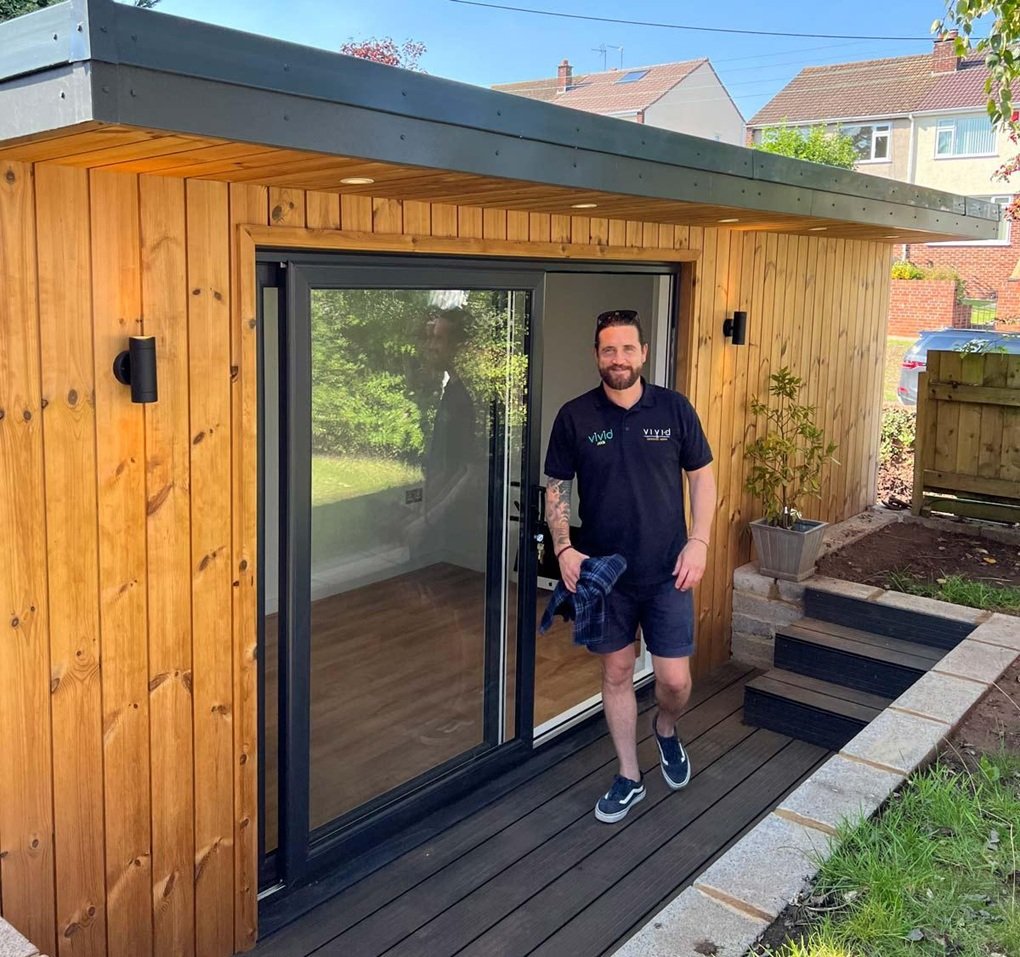
When most people think of a garden office, they picture remote workers, consultants, or people working in technology. Yet one of the fastest-growing groups embracing garden offices are tradespeople.
Electricians, plumbers, carpenters, landscapers, builders, decorators, and other skilled contractors are discovering that a dedicated workspace at home can make a significant difference to both their business and personal lives.
Modern trade businesses require much more than practical skills and a van full of tools. Behind every successful contractor is a growing amount of administration, customer communication, planning, and business management. A garden office provides a practical way to handle these responsibilities while creating a healthier separation between work and home.
The Trade Has Changed
For previous generations, most trade businesses were run from a notebook in the van, a filing cabinet in the garage, or paperwork spread across the kitchen table.
Today, customers expect much more.
They want detailed quotations, prompt responses to enquiries, digital invoices, online reviews, professional communication, and regular updates throughout a project. Tradespeople are increasingly managing websites, social media profiles, supplier relationships, health and safety documentation, and digital accounting systems alongside their day-to-day work.
This means that many contractors now spend several hours each week on administration tasks that require concentration and organisation.
The Problem with the Kitchen Table Office
For many sole traders, the working day doesn’t end when they leave site.
After dinner comes the paperwork:
- Writing quotations
- Sending invoices
- Ordering materials
- Responding to customer emails
- Scheduling upcoming jobs
- Managing accounts
The kitchen table often becomes the default workspace, but it rarely provides the focus needed to complete these tasks efficiently.
Household distractions, television noise, family activities, and the constant need to pack everything away can make business administration feel like a never-ending chore.
A garden office changes this dynamic completely.
Creating a Professional Business Hub
A dedicated garden office provides something every growing trade business needs: a professional base of operations.
Rather than working wherever there happens to be space, tradespeople gain a dedicated environment for:
- Project planning
- Customer communication
- Preparing quotations
- Managing finances
- Storing business records
- Conducting video consultations
Having a consistent workspace often leads to better organisation, improved productivity, and less stress.
For many contractors, it becomes the place where the business is managed rather than simply where paperwork is completed.
Better Work-Life Balance
One of the most frequently mentioned benefits of a garden office is the separation it creates between work and home life.
Many self-employed tradespeople struggle to switch off.
The phone remains nearby. Customer emails arrive throughout the evening. Quotes need completing before tomorrow’s site visit. Work gradually creeps into family time.
A garden office creates a physical boundary.
When it’s time to work, you step into the office. When the work is finished, you close the door and return home. This simple separation helps many business owners establish healthier routines and spend more focused time with family.
A Space That Supports Growth
As trade businesses become more successful, administration requirements tend to increase.
More customers often mean:
- More enquiries
- More paperwork
- More scheduling
- More supplier management
- More financial administration
What starts as a one-person operation can quickly evolve into a business managing subcontractors, multiple projects, and larger budgets.
A garden office provides space to grow without the expense of renting commercial premises. It can support everything from project planning and bookkeeping to staff management and client meetings.
Not Just for Office Work
Interestingly, many tradespeople use their garden office for more than administration.
Some use the space for:
- Product demonstrations
- Design consultations
- Sample displays
- Training and certification courses
- Research and development
- Marketing activities
Landscape designers, carpenters, and specialist installers often find that a garden office gives them a professional environment to discuss projects with clients before work even begins.
Are There Any Downsides?
Like any investment, a garden office is not without its challenges.
Potential considerations include:
- Initial installation costs
- Heating and electricity expenses
- Internet connectivity requirements
- Security considerations
- Available garden space
However, many tradespeople find that the benefits outweigh the costs, particularly when the office becomes a central part of running the business.
The time saved, improved organisation, and enhanced work-life balance can often deliver value far beyond the financial investment.
The Future of the Modern Trade Business
The image of the tradesperson working solely from a van is becoming increasingly outdated.
Today’s successful contractors are business owners, project managers, marketers, customer service providers, and administrators as well as skilled craftspeople.
A garden office reflects this evolution.
It provides a dedicated space to manage the business side of the trade while helping create a clearer distinction between professional responsibilities and personal life.
For many UK tradespeople, investing in a garden office isn’t about having somewhere else to work. It’s about building a stronger business, improving organisation, and creating a lifestyle that is more sustainable in the long term.
As more contractors embrace flexible working and digital business tools, the garden office is rapidly becoming an essential part of the modern trade business.