


Minimalism and Structural Flow in the Modern Cedar Pod
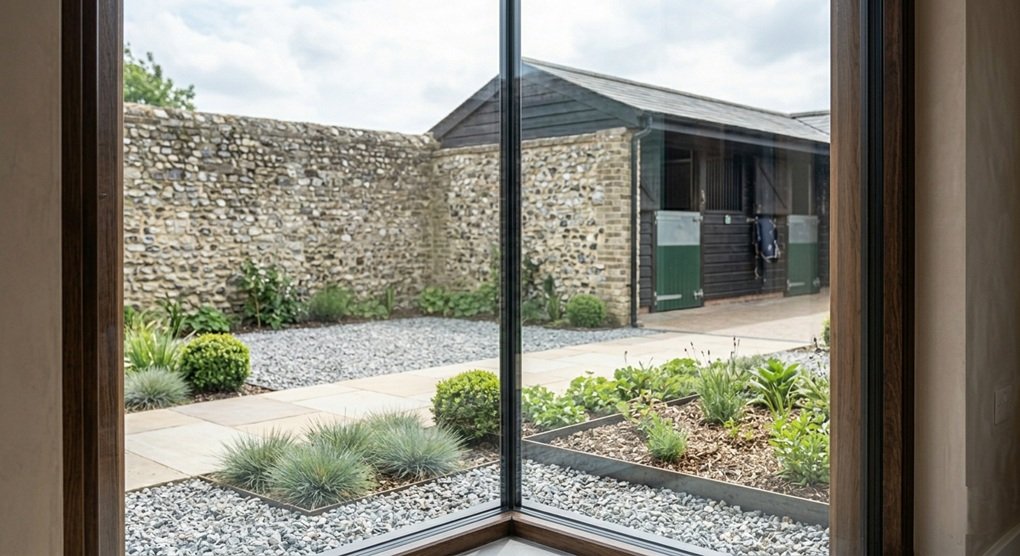
Stepping across your garden path and opening the door to your cedar studio represents a psychological transition. It is the modern equivalent of the morning train ride, distilled into a few deliberate steps across a mown lawn. However, once you sit at your desk, the internal architecture of that space dictates your cognitive clarity. In a compact, detached environment, physical clutter does not just occupy space—it actively drains your mental energy.
To establish an environment optimized for deep intellectual work, high-end remote professionals are turning to the principles of spatial geometry and architectural minimalism. By intentionally structuring the lines of sight, natural light flow, and furniture placement within a timber studio, you can cultivate a deep, sustained focus that is rarely achievable in a conventional corporate office.
The Spatial Psychology of Sightlines
When designing the layout of a compact garden room, where you position your desk relative to the windows and doors is crucial. A poorly placed workstation can trigger subtle, subconscious distractions that continually break your workflow.
- The Power of the Command Position: Ideally, your desk should be positioned so you can see the main entrance door and look out into the garden without having to turn your head fully. This setup provides an instinctive sense of security and control over your environment, allowing your mind to settle into deep work.
- Managing Window Distractions: Positioning a dual-monitor workstation directly facing a large window can cause severe eye strain due to the high contrast between the bright outdoor light and your screens. Instead, orient your desk perpendicular to major glass panes. This placement allows soft natural light to wash across your workspace from the side, giving you a refreshing view of the landscape when you glance up, without the blinding glare.
- The “Zero Clutter” Horizon: Ensure that the wall directly behind your monitors—your primary line of sight for hours at a time—is kept entirely clean and minimalist. Avoid busy shelving or messy cable runs here; instead, opt for a smooth, matte finish or simple timber cladding to give your eyes a calm, neutral place to rest.
Structural Flow: Integrating Minimalist Infrastructure
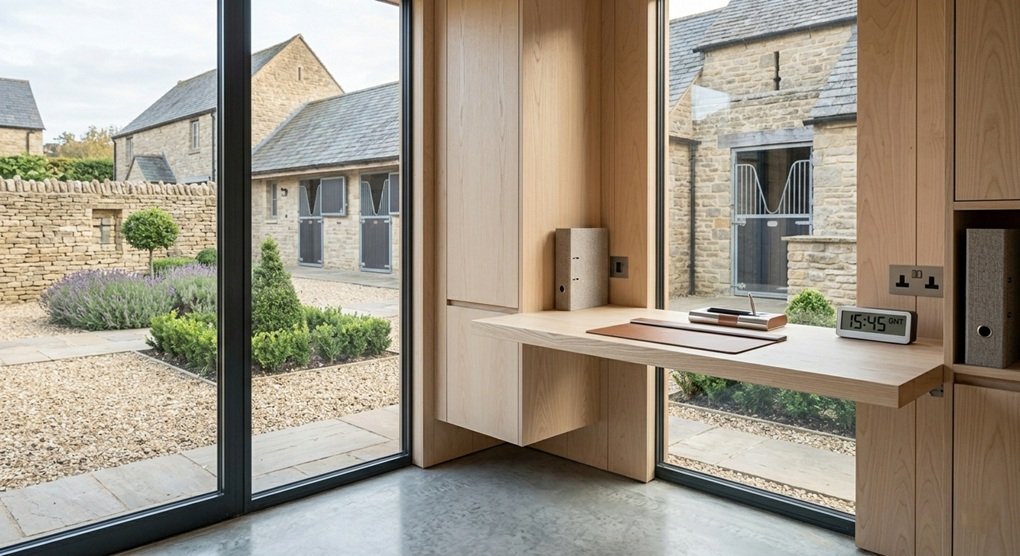
True minimalism is not about simply throwing things away; it is about hiding your essential infrastructure so completely that the space feels effortless.
Built-In Floating Joinery
- Pros:
- Floating ash or oak desks anchored directly to the wall framework maximize visible floor space, making a compact room feel significantly larger and more open.
- Custom cabinetry can be built flush into the timber walls, providing ample storage for physical files and reference materials without encroaching on your physical moving room.
- It creates unbroken geometric lines that naturally draw your eyes toward the outdoor landscape, reinforcing the peaceful feeling of working in nature.
- Cons:
- Fixed, wall-mounted furniture cannot be easily rearranged if you decide to change your office layout or upgrade your tech array down the line.
- Custom joinery demands a higher initial investment and requires a professional finish to match the internal timber lines flawlessly.
Freestanding Modular Workstations
- Pros:
- Offers complete operational flexibility, allowing you to move your desk easily to follow changing seasonal light patterns or adapt to new hardware setups.
- Makes it simple to integrate high-performance ergonomic assets, such as independent, height-adjustable standing desks.
- Usually a more budget-friendly option that can be brought into the studio fully assembled.
- Cons:
- Exposed desk legs and supporting structures can visually break up the clean lines of a compact room, making the space feel busier.
- Cable management requires meticulous planning and specialized trays to prevent wires from cluttering the floor beneath your desk.
The Protocol for Structural Clarity
To unlock the full cognitive benefits of your garden studio’s geometry, consider implementing these foundational design principles:
- Incorporate Hidden Wire Pathways: When installing your electrical points, ensure all data cables, power leads, and charging bricks are routed through dedicated desk grommets and tucked into under-desk cable trays. The goal is to ensure absolutely no wires touch the floor or remain visible from the doorway.
- Balance Warm Elements with Clean Finishes: Balance the rich, organic texture of external cedar cladding by using clean, light internal surfaces. Combining smooth birch-ply panels or off-white plasterboard with a single, high-quality brass or matte black task lamp creates a beautiful, focused contrast.
- Establish a One-In, One-Out Policy: In a garden room, space is at a premium. Treat your studio as a dedicated sanctuary for thought. For every new book, hardware asset, or document file brought down from the main house, ensure an older item is archived or moved back inside to preserve your clean, expansive mental horizon.