

Eco-Friendly Workspaces and Green Practices
October 2024
Categories: Sustainability / Business & Lifestyle
Tags: hybrid work, sustainability, garden offices, eco-friendly, energy efficiency
By David
By October 2024, sustainability has become a core component of hybrid work strategy in the UK. As organisations and employees refine their hybrid setups, attention is turning to environmental impact, energy efficiency, and eco-conscious workspace design. Whether outfitting a garden office, upgrading home workspaces, or planning hybrid hubs, green practices now influence both cost savings and corporate responsibility.
The Green Hybrid Office
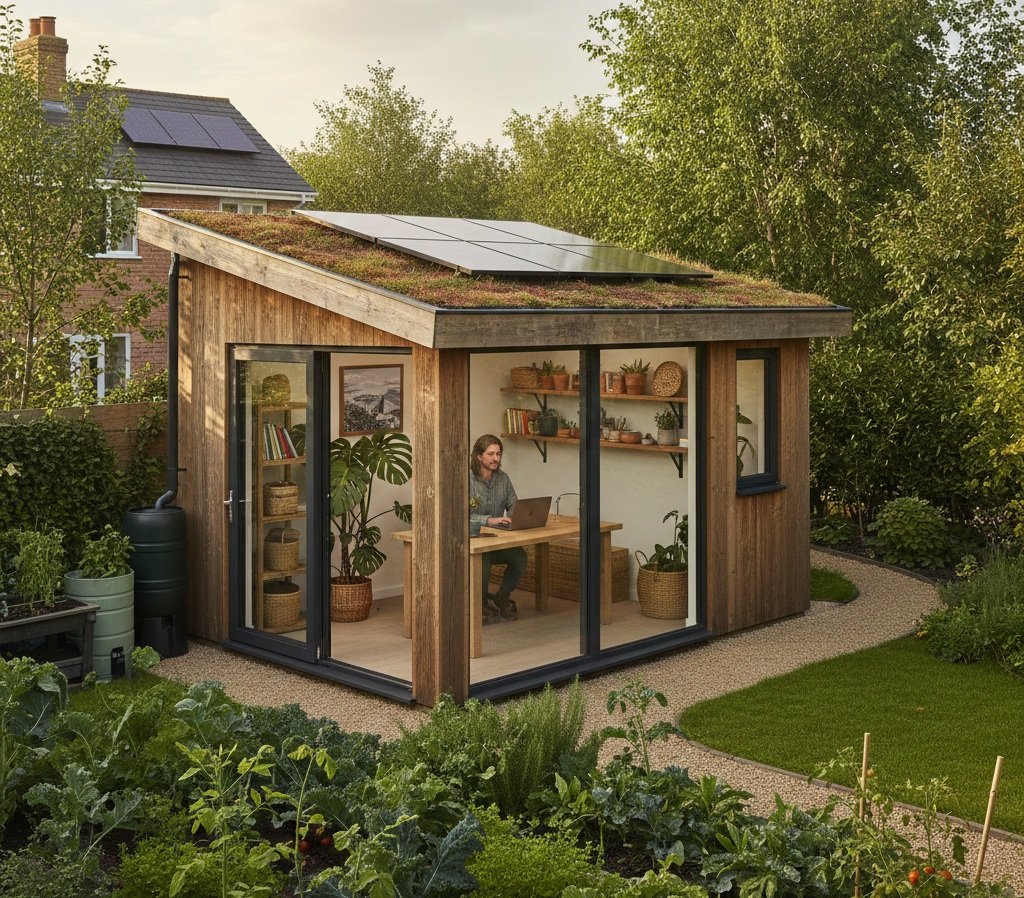
Modern hybrid workspaces are evolving beyond mere productivity: they are low-impact, environmentally conscious environments. Key features include:
- Energy Efficiency: Solar panels, LED lighting, and smart thermostats reduce energy consumption while maintaining comfort
- Eco-Friendly Construction: Recycled or sustainably sourced materials for garden offices, desks, and furniture
- Water and Waste Management: Rainwater collection, low-flow plumbing, and responsible recycling systems
- Indoor Environmental Quality: Natural ventilation, air filtration, and biophilic design for healthier, more productive spaces
Garden offices and dedicated home workspaces are ideal platforms for integrating these practices. For first-time remote workers, sustainable setups offer not only environmental benefits but also long-term cost savings.
A green workspace is not just responsible — it is strategic, supporting wellbeing, productivity, and financial efficiency.
Environmental Benefits for Employers
Sustainability initiatives provide tangible advantages for organisations:
- Reduced Carbon Footprint: Lower energy use and smarter office planning contribute to corporate environmental targets
- Cost Savings: Energy-efficient lighting, heating, and cooling systems reduce operational expenses
- Brand Reputation: Demonstrating environmental responsibility strengthens employer branding and attracts eco-conscious talent
- Hybrid Enablement: Supporting remote and garden offices reduces commuting emissions and office energy consumption
Integrating eco-friendly policies aligns environmental goals with hybrid work strategies, creating a win-win for business and employees.
Supporting Employee Wellbeing
Green practices also intersect with employee wellbeing and productivity:
- Natural light, ventilation, and biophilic design reduce fatigue and improve focus
- Ergonomic and responsibly sourced furniture supports physical health
- Smart energy controls maintain comfort while reducing environmental impact
First-time remote workers benefit from guidance on sustainable setups, including sourcing eco-friendly equipment and optimising energy use in their home or garden office.
Industry Opportunities and Innovation
The UK market for sustainable hybrid work solutions is expanding rapidly:
- Garden Office Manufacturers: Offering modular, low-impact, energy-efficient options
- Furniture and Equipment Providers: Recycled, ergonomic, and low-energy products
- Smart Energy Solutions: IoT-enabled systems that automate lighting, heating, and energy monitoring
- Consultancy Services: Advising organisations and individuals on sustainable hybrid work setups
Advertisers and service providers have a growing opportunity to demonstrate eco-value, highlighting environmental, financial, and lifestyle benefits for hybrid professionals.
Practical Tips for a Sustainable Workspace
For both employers and employees:
- Invest in Energy-Efficient Equipment: Laptops, monitors, and lighting systems that consume less power
- Choose Sustainable Furniture: Ergonomic and recycled materials for long-term comfort and reduced impact
- Optimise Natural Resources: Maximise daylight, passive heating, and ventilation
- Leverage Smart Technology: Thermostats, timers, and energy monitoring tools to reduce waste
- Integrate Biophilic Design: Plants and natural materials improve air quality, wellbeing, and aesthetics
Sustainability in hybrid work is practical, impactful, and increasingly expected by employees, clients, and stakeholders alike.
Looking Ahead
In 2024, sustainable hybrid work is more than a trend — it is a strategic advantage. Organisations that invest in eco-friendly office solutions reduce costs, support employee wellbeing, and reinforce their environmental credentials. Employees, especially those new to remote work, gain from healthier, more productive workspaces and long-term cost savings.
Green hybrid workspaces are the future: combining professional performance, employee wellbeing, and environmental responsibility in a single strategy.