


Integrated Water Systems: Sustainable Solutions for Garden Office Utilities
Exploring the next stage of eco-friendly office pods by focusing on water efficiency. This includes guidance on installing small-scale rainwater harvesting systems for grey water use and composting toilets to reduce reliance on main house utilities, all relevant to UK building standards.
As the popularity of permanent garden office pods continues to rise across the UK, the focus is shifting from simple insulation to full utility self-sufficiency and environmental responsibility. This article explores the vital next stage in eco-friendly office design: integrated water management systems. By minimising the reliance on the main house’s utilities, these solutions not only reduce running costs but also significantly lower the office’s overall environmental footprint. We aim to provide practical, compliant guidance for homeowners looking to implement these sustainable systems.
Harvesting Rainwater for Grey Water Use
One of the most immediate and effective steps toward water independence is the installation of a small-scale rainwater harvesting system. The roof of a garden office, even a small one, can capture a significant amount of water, which is perfectly suitable for non-potable uses, often referred to as ‘grey water’.
Key Components and Installation Guidance:
- Catchment: The office roof acts as the primary catchment area. Ensure gutters are well-maintained and fitted with a leaf filter or guard to prevent debris from entering the system.
- Filtration: A simple first-flush diverter is essential. This device bypasses the initial runoff, which contains most of the dirt and contaminants, sending only cleaner water to the storage tank.
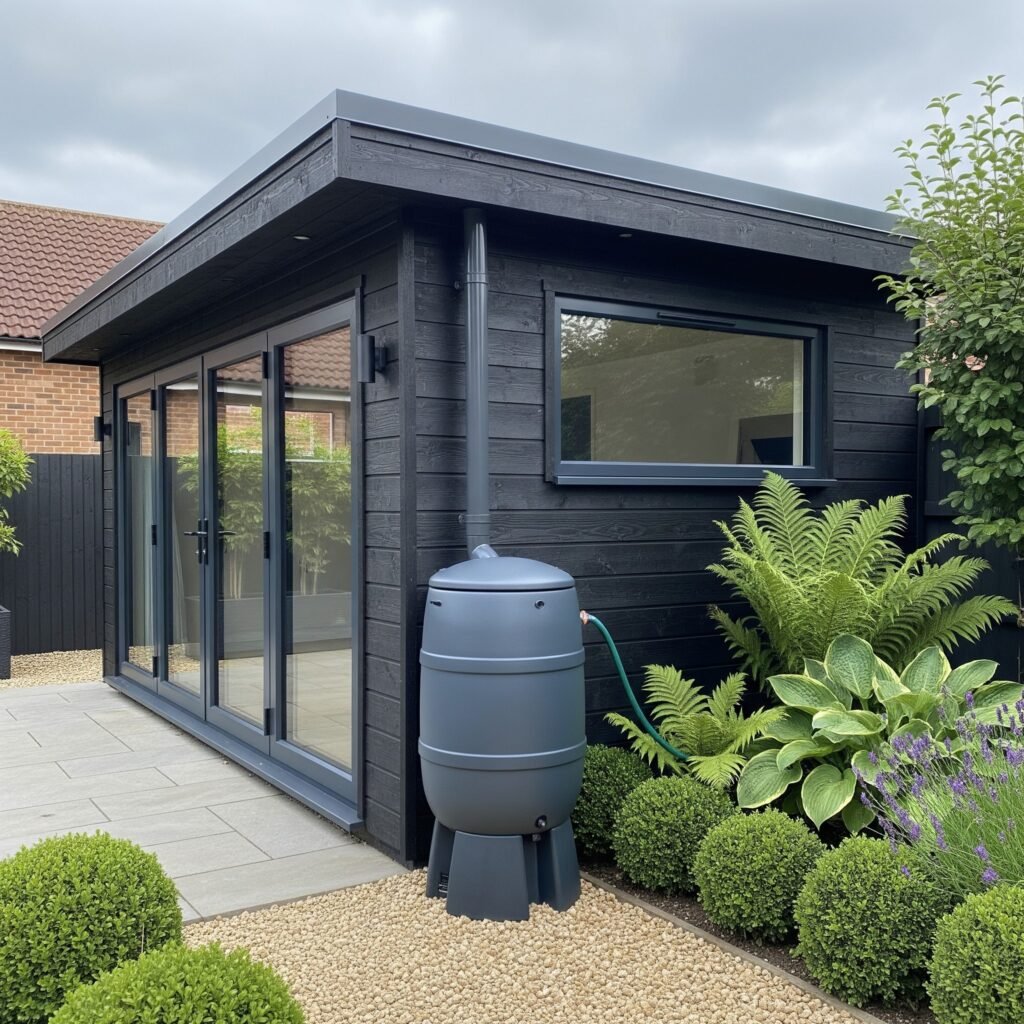
- Storage: A rainwater butt or an underground tank is used for storage. For aesthetic and space-saving reasons, many homeowners choose slimline or rectangular butts that can be discreetly positioned against the rear or side of the pod, or even sunk partially into the ground. Storage capacity should be calculated based on roof size and typical local rainfall.
- Distribution: A small, low-power submersible pump can be used to move the water from the butt into a dedicated grey water header tank within the office. This water can then be piped to a sink for handwashing or for flushing a toilet (if a conventional or low-flush system is installed).
Relevance to UK Building Standards: Any permanent structure, including garden offices, must comply with local building regulations. While rainwater harvesting is encouraged, the separation of potable (mains) water and non-potable (harvested) water systems is mandatory to prevent cross-contamination.
The Role of Composting Toilets
The most significant reduction in water usage comes from eliminating the need for water-flushing sanitary systems.
Composting toilets (also known as dry toilets or waterless toilets) are an excellent, low-maintenance solution for a garden office.
Benefits and Operation:
- Zero Water Use: They require no water for flushing, completely removing a major drain on household utilities.
- Waste Management: They work by separating liquid waste (urine) from solid waste (faeces). The solid waste is mixed with a carbon additive (like sawdust or peat) and slowly composts over time into a sterile, soil-like material. The liquid waste can be diverted to a dedicated soakaway or storage tank for later disposal or diluted use as fertiliser.
- Odour Control: Modern composting toilets use a small, low-voltage fan to continuously vent the system, ensuring that odours are practically non-existent and often better managed than in a conventional flushing system.
Compliance and Maintenance: While they offer freedom from sewerage connections, disposal of the final composted material must be done responsibly. Regular maintenance, typically every few months, involves emptying the solid waste chamber.
Visualisation and Design Integration.
The key to a successful installation is making these systems an attractive, integrated feature of the office pod design, rather than an afterthought.