


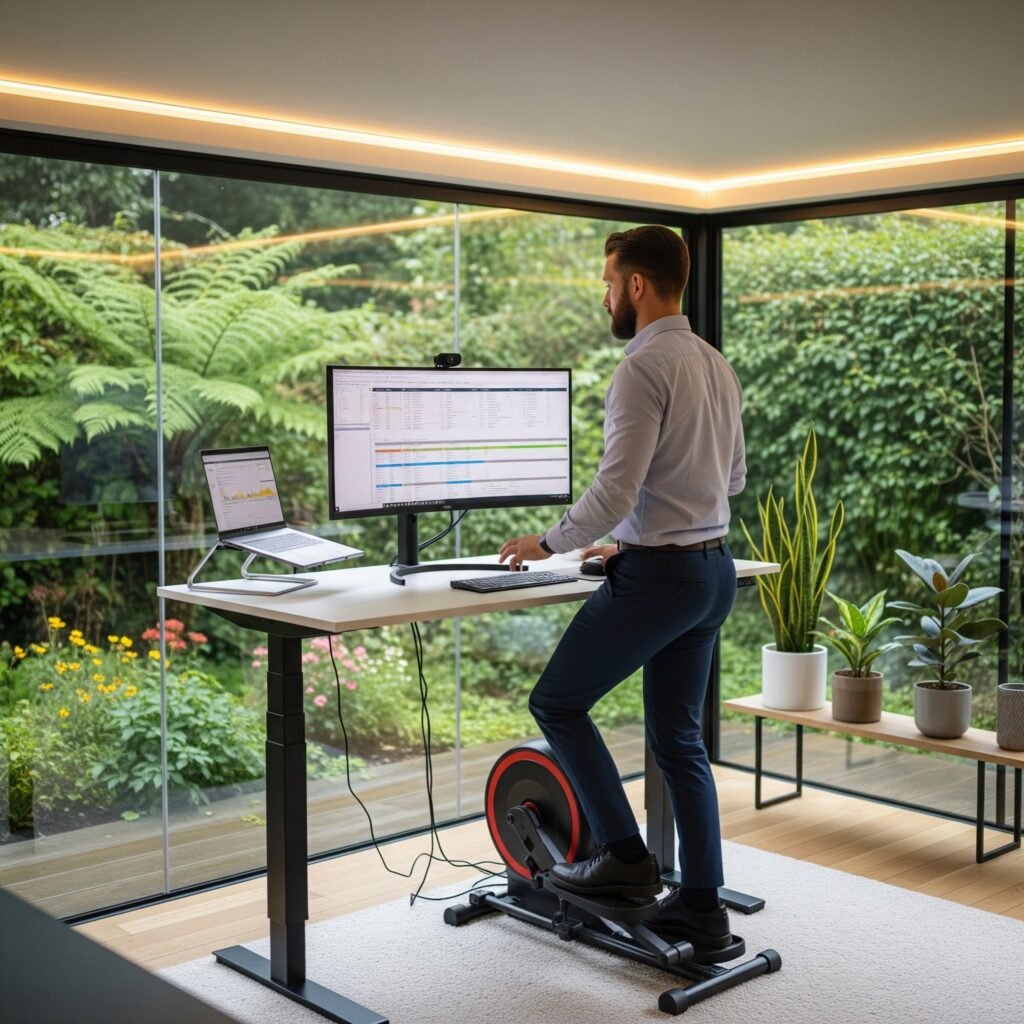
Moving past traditional seating, this piece examines new ergonomic solutions: walking desks, active sitting stools, under-desk elliptical machines, and smart flooring that monitors standing time. The focus is on integrating constant, low-level movement to combat the sedentary nature of remote work.
The Dawn of the Dynamic Workspace: Ergonomics Beyond the Chair
The modern workplace, increasingly defined by the flexibility and isolation of remote work, necessitates a radical departure from traditional, passive seating arrangements. This piece delves into the next generation of ergonomic solutions, moving decisively past the conventional office chair to actively integrate constant, low-level movement—what can be termed ‘micro-movement’—into the daily routine of the knowledge worker. The core objective is to combat the pervasive and detrimental sedentary nature of working from home.
These innovative solutions focus on turning static work time into opportunities for subtle, continuous physical activity:
- Walking Desks and Treadmill Workstations: These systems encourage sustained, low-intensity ambulation while performing tasks. By maintaining a slow, steady pace, users can improve circulation, elevate metabolism, and enhance cognitive function without significantly disrupting focus, transforming hours of sitting into hours of gentle movement.
- Active Sitting Stools and Balance Chairs: Far from being static, these chairs feature rounded bases, pivot points, or high perches that necessitate continuous micro-adjustments in posture. The user’s core and leg muscles are subtly engaged to maintain balance, turning the act of sitting into a minor, continuous workout. This helps to strengthen core musculature and prevent the stiffness associated with fixed postures.
- Under-Desk Elliptical Machines and Pedal Exercisers: Designed for discreet use, these devices allow for a seated lower-body workout. They offer a non-impact way to keep the legs moving, stimulating blood flow and preventing the pooling of blood in the extremities, a common side effect of prolonged sitting.
- Smart Flooring and Integrated Movement Monitoring Systems: This advanced technology represents the future of the dynamic office. Smart flooring embedded with pressure sensors monitors the time a user spends standing versus sitting. Coupled with wearable technology, these systems can provide real-time feedback, prompting the user to change position, take a break, or simply shift their weight, thus gamifying movement and ensuring that the health goals are met throughout the workday.
By integrating these technologies, the home office evolves from a static environment to a dynamic ecosystem that actively supports health and productivity. The focus shifts from merely supporting a static posture to facilitating constant, subtle adjustments, making low-level movement an inherent, unconscious part of the remote work experience.