


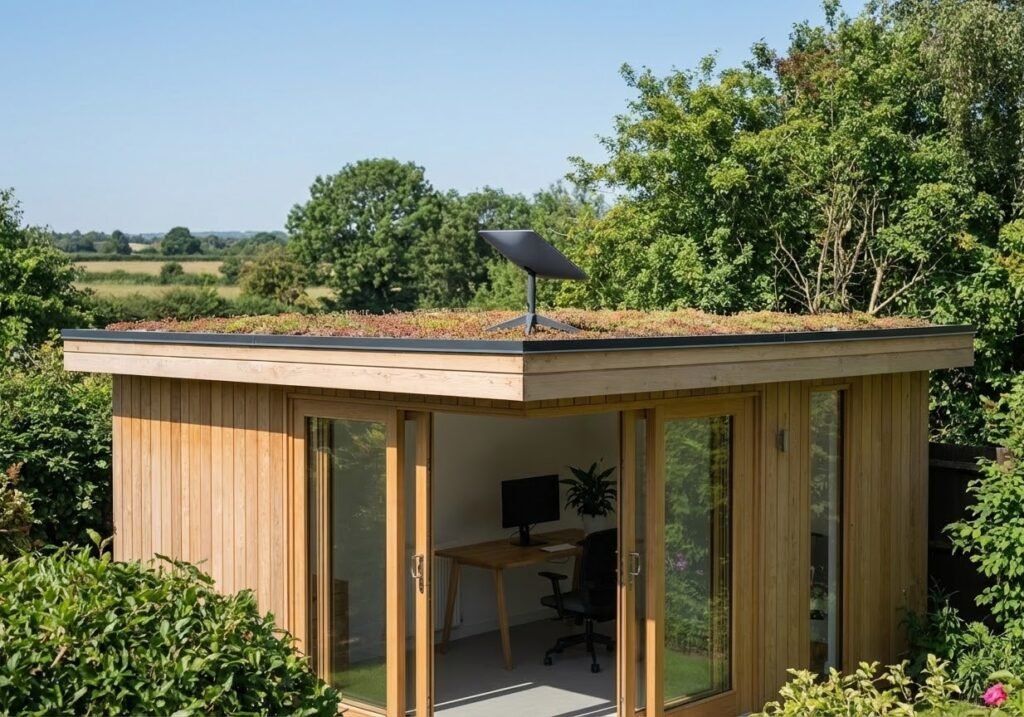
A forward-looking strategic review specifically tailored for professionals, businesses, and residents operating in hard-to-reach, geographically challenging, and digitally underserved areas across the United Kingdom. The core objective is to conduct a meticulous and data-driven comparison and contrast of the performance potential, critical deployment timelines, associated regulatory hurdles, and a thorough long-term cost-benefit analysis of two revolutionary broadband connectivity technologies:
1. Low Earth Orbit (LEO) Satellite Internet Providers: A focus on emerging global constellations like Starlink (SpaceX) and OneWeb, assessing their current service offerings, scalability, and immediate impact potential for rapid deployment in rural and coastal UK environments.
2. Next-Generation Cellular Networks (6G): An examination of the highly anticipated sixth generation of mobile network technology, focusing on its projected capabilities—including terahertz spectrum utilization and integrated artificial intelligence—and the realistic timeframe for its commercial viability and widespread deployment across non-urban landscapes.
Low Earth Orbit (LEO) Satellite Internet Providers: An In-Depth Analysis of Emerging Global Constellations
This section focuses on the rapid emergence of global Low Earth Orbit (LEO) satellite constellations, specifically examining the market-leading services, Starlink (developed by SpaceX) and OneWeb. The analysis assesses their current service offerings, technical capabilities, and scalability for sustained growth. Furthermore, it evaluates their immediate impact potential, particularly for rapid deployment and providing high-speed, low-latency broadband access in traditionally underserved areas within the United Kingdom.
Starlink (SpaceX): Starlink is currently the dominant LEO provider, characterized by a massive and continually growing constellation of thousands of mass-produced, small satellites operating at altitudes of approximately 550 km.
- Service Offering: Delivers high-speed internet with low latency (typically 25-60 ms), achieving download speeds that frequently exceed 100 Mbps, making it a viable alternative to terrestrial fiber and fixed-wireless solutions.
- Scalability: Its scale-first deployment model, leveraging SpaceX’s reusable Falcon 9 launch system, allows for unmatched deployment speed, positioning it for aggressive global expansion and increased capacity, crucial for mitigating network congestion as subscriber numbers rise.
- Impact in the UK: Starlink is already operational across the UK, providing immediate connectivity solutions for remote farms, mountainous regions, and coastal communities where laying physical fiber is economically or geographically prohibitive.
OneWeb (now Eutelsat OneWeb): OneWeb operates a constellation of several hundred satellites in a polar orbit, focusing initially on government, enterprise, and carrier-backhaul services, though residential service is an emerging possibility.
- Service Offering: Designed to provide global connectivity with a strong emphasis on consistent, high-bandwidth service, often targeting business-to-business (B2B) and bulk connectivity markets. Latency is competitive with other LEO systems.
- Scalability: While its constellation is smaller than Starlink’s, its strategic use of polar orbits ensures comprehensive coverage of higher latitudes, a significant advantage for users in Northern Scotland and other remote UK territories. Its partnership approach focuses on integrating its network with existing telecom infrastructure.
- Impact in the UK: OneWeb is headquartered in the UK and plays a strategic role in the nation’s space and connectivity strategy. Its enterprise focus can provide robust backhaul for mobile network operators (MNOs) and fixed-wireless access (FWA) providers, enhancing the reach of 4G/5G networks into remote coastal and rural UK environments.
Immediate Impact Potential for UK Rural and Coastal Deployment: Both LEO constellations offer a paradigm shift in addressing the digital divide. Their ability to bypass the need for extensive terrestrial infrastructure trenching means they offer the most rapid deployment solution for high-quality broadband. This is transformative for areas like the Scottish Highlands, the Hebrides, and various isolated fishing and farming communities along the UK coastline, accelerating the UK’s universal service obligation goals.
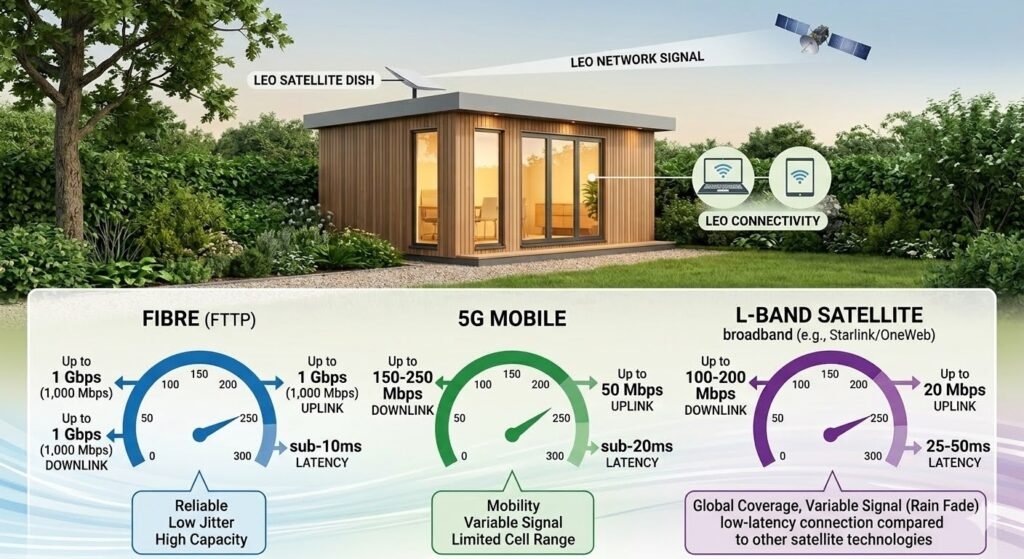
Next-Generation Cellular Networks (6G): A Deep Dive into the Future of Connectivity
The highly anticipated sixth generation of mobile network technology, commonly referred to as 6G, represents a paradigm shift beyond the capabilities of its 5G predecessor, promising to fundamentally reshape the digital landscape. This examination focuses on its projected, revolutionary capabilities and attempts to provide a realistic assessment of the timeline for its commercial viability and widespread deployment, particularly in underserved non-urban landscapes.
Projected Capabilities: Breaking the Bandwidth Barrier
6G is poised to deliver unprecedented levels of performance, with speeds projected to reach terabits per second—a significant leap from 5G’s gigabit speeds. A cornerstone of this advancement is the terahertz (THz) spectrum utilization. Operating in the range of 100 GHz to 10 THz, the THz band offers massive contiguous blocks of spectrum, enabling the extreme data rates required for truly immersive applications like holographic communication, high-fidelity digital twins, and instant, high-volume data transfer.
Crucially, 6G is being architected with integrated artificial intelligence (AI) from the ground up. This integration goes beyond simple network management; AI will be embedded in the network core to enable intelligent resource allocation, predictive maintenance, dynamic security protocols, and real-time optimization of communication paths. This AI-driven architecture will allow the network to be self-optimizing and highly adaptable to user demand and environmental changes, minimizing latency and maximizing reliability. Furthermore, 6G networks are expected to support sub-millisecond latency, massive device density (trillions of connected devices), and exceptional energy efficiency, facilitating the true realization of the Internet of Everything (IoE).
Deployment Realities: The Path to Commercial Viability
While the technological ambitions are vast, the realistic timeframe for commercial viability and widespread deployment extends into the next decade. Industry consensus points toward initial standardization efforts concluding around 2028-2030, with early commercial rollouts likely commencing shortly thereafter. However, the true widespread deployment, especially across non-urban landscapes, presents significant infrastructural challenges that will take additional years to overcome.
The move to the THz spectrum introduces complexities, notably the high susceptibility to atmospheric attenuation and the need for shorter transmission ranges compared to current cellular technologies. This necessitates a denser network of smaller, highly localized base stations and repeaters—a challenging and costly infrastructure investment, particularly in less populated or remote areas. The successful deployment in non-urban landscapes will depend heavily on:
- Technological Maturity: The development of cost-effective, high-efficiency THz hardware and power solutions.
- Regulatory Harmonization: Global agreement on standardized frequency bands and interoperability protocols.
- Government and Private Investment: Significant public-private partnerships to fund the vast infrastructural expansion required to bridge the digital divide and ensure equitable access across all geographic areas.
In summary, 6G promises a transformative leap in connectivity, but its full impact on society, including comprehensive coverage in non-urban areas, is a goal that requires continued, concerted research, standardization, and substantial capital expenditure over the next decade and beyond.
Core Assessment Focus:
The central analysis will be dedicated to assessing which of these two distinct solutions offers the most reliable, consistently high-speed, and economically viable pathway to effectively closing the pervasive digital divide for the UK’s most isolated and economically marginal communities over the forthcoming decade (2025-2035).
Key Technical and Economic Considerations to be Detailed:
- Performance Metrics: A detailed breakdown of key technical specifications will be provided, including:
- Latency: Comparing the sub-20ms potential of LEO systems with the single-millisecond goals of 6G.
- Uplink/Downlink Speeds: Benchmarking the symmetrical multi-gigabit potential of 6G against the asymmetrical, high-throughput capability of LEO satellite systems.
- Jitter and Reliability: Analyzing network stability under various environmental and usage conditions.
- End-User Requirements: A practical look at the hardware and infrastructure necessary for adoption, contrasting the cost and installation complexity of LEO ground terminals (dishes) versus the eventual need for new 6G-compatible cellular devices and small cell infrastructure.
- Regulatory and Infrastructure Hurdles: Discussion of spectrum licensing challenges, the planning permission complexities for ground stations (teleports and small cells), and the national and local government policy required to accelerate adoption.
- Economic Viability and Sustainability: A full-lifecycle cost analysis comparing the capital expenditure (CapEx) and operational expenditure (OpEx) for providers and the final subscription and hardware costs for end-users, critically examining the long-term sustainability of both models in low-density population areas.
Last updated: 16 March 2026