

The Autonomy of the Outbuilding and the ‘Kitchen Friction’ Conundrum
The modern garden office, once a simple retreat for focused work, is rapidly evolving into a fully autonomous micro-workspace. This shift is highlighted by a recurring theme identified in the comprehensive 2024 Garden Commuter survey: the insidious challenge of “Kitchen Friction.” This term quantifies the measurable productivity loss—a cumulative drain on work hours—that occurs when a commuter must repeatedly interrupt their flow, navigate the garden, and enter the main house simply to access basic amenities like a glass of water, a fresh cup of coffee, or a quick snack. Analysis of time-motion studies suggests that these minor interruptions, when totaled over a working week, can equate to a significant loss of focused output. To mitigate this friction and truly establish the outbuilding as a standalone professional environment, there is a compelling, market-driven need for on-site refreshment facilities. This demand has spurred the rapid proliferation of the Micro-Kitchenette concept.
However, the pursuit of full kitchen utility often runs headlong into a major infrastructural and financial hurdle. Integrating traditional hot and cold running water, along with a mandatory waste drain, into a garden office necessitates extensive civil engineering work. The required trenching for utility lines, connecting to the main dwelling’s plumbing, and the installation of an appropriate waste system can incur costs upwards of £3,000 for groundwork alone, often making the project financially prohibitive or overly disruptive.The Low-Impact, High-Design Solution: The ‘Dry Bar’ Concept
In response to this cost-benefit imbalance, we advocate for the “Dry Bar” concept—a sophisticated, high-design hydration station explicitly engineered to operate without reliance on mains drainage or permanent plumbing. This low-impact methodology achieves approximately 90% of a traditional kitchen’s utility for refreshment and light cleaning, yet requires only 10% of the typical infrastructure cost.
The core principle involves a closed-loop system:
- Potable Water Storage: High-capacity, food-grade glass or stainless steel carboys and dispensers are used for clean drinking water. These can be refilled weekly from the main house, eliminating the need for a continuous supply line.
- Minimal Waste Handling (Greywater Capture): For the occasional necessity—such as rinsing a coffee cup, handwashing, or emptying a French press—a dedicated, eco-friendly “Greywater” capture system is employed. This typically involves a small, aesthetically integrated basin draining into a removable sealed container (or a simple planted soak-away if local regulations allow). This drastically minimizes the volume of waste requiring disposal, negating the need for a complex mains drainage connection.
The Eco-Kitchenette Checklist: A Component Breakdown
Successful implementation of the Dry Bar relies on the strategic selection of high-efficiency, off-grid components:
- Solar-Powered Cooling System: Traditional mini-fridges are energy inefficient. We specifically endorse the use of high-efficiency portable compressor fridges, such as the Dometic CFX3 series. These are designed for portability and minimal energy draw. They can be effectively powered by a single, roof-mounted 100W photovoltaic (solar) panel combined with a small, discreet battery bank, making the cooling function entirely independent of the main house’s electrical supply. This provides reliable cooling for milk, drinks, and essential snacks.
- Gravity-Fed Water Filtration: To ensure high-purity drinking water without a plumbed tap, robust gravity filtration systems are essential. Market leaders like the Berkey or the British Berkefeld stainless steel filters utilize ceramic or carbon elements to remove pathogens and impurities, offering superior water quality on demand without consuming any electricity or requiring water pressure.
- Modular and Resilient Cabinetry: To withstand the inherent humidity and seasonal temperature fluctuations common in timber-framed garden buildings, standard kitchen cabinetry is unsuitable. The structure of the Dry Bar must be constructed from moisture-resistant materials such as Valchromat (a highly compressed, water-resistant MDF derivative) or high-quality, reclaimed birch plywood sealed with a marine-grade varnish. The design must prioritize ventilation and modularity for easy cleaning and component replacement.
Hydration Station Implementation Tiers
To cater to various budgets and usage patterns, the Micro-Kitchenette can be implemented in distinct tiers:
| Tier | Components | Cost Est. | Complexity | Typical User |
| The Minimalist | Insulated Growler (for hot/cold drinks) + High-Quality French Press | £80 | None | The Occasional Commuter or Tea Drinker |
| The “Dry Bar” | Gravity Filter + Solar Mini-Fridge + Modular Cabinetry | £600 – £950 | Low (DIY/Basic Carpentry) | The Daily Coffee Drinker Seeking Autonomy |
| The Full Plumb | Mains Water Connection + Under-sink Water Heater + Full Drainage | £2,500+ | High (Trade Required) | The Chef/Full-Time Dweller with High Utility Needs |
Aesthetic Integration and Design Philosophy
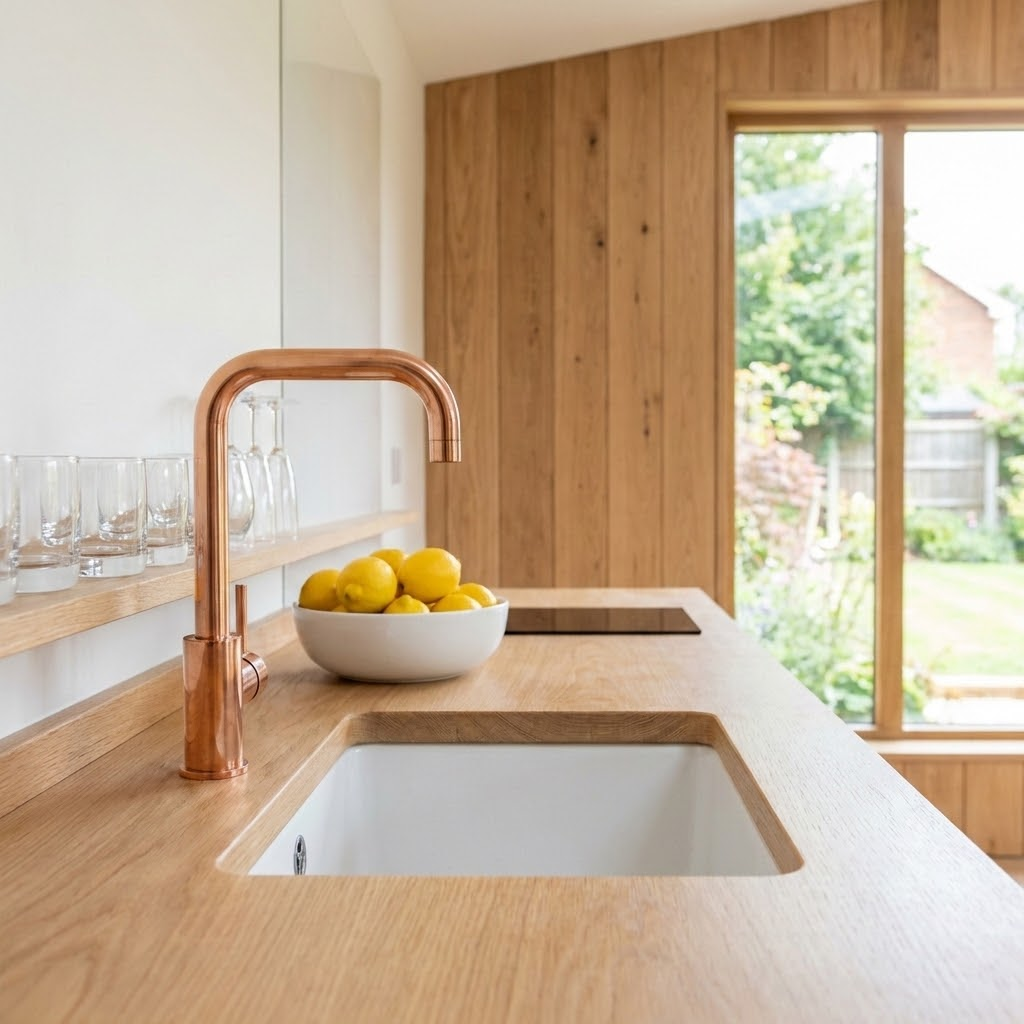
Crucially, to maintain the professional and focused atmosphere of the garden office, the Micro-Kitchenette must be seamlessly integrated into the existing architectural style. The goal is to avoid the visual dissonance of a standard, utilitarian household kitchen unit. We recommend opting for custom-built, integrated shelving and closed units that explicitly match the materials and finish of the existing desk, bookcases, or filing systems. The appliance-hosting modules should appear less like a “kitchen counter” and more like an extension of the professional office joinery. This approach ensures the function of the unit supports productivity without undermining the aesthetic of the workspace.nsures the kitchenette feels like a bespoke piece of furniture rather than an afterthought.