

A Deep Dive into Hyper-Proximity Nutrition
Date: 22 March 2025
The Spring Equinox Shift: From Desk to Dinner in Two Metres
The calendar marker of the 20th of March, the Spring Equinox, signifies more than a mere celestial event; it heralds a fundamental change in the functionality of the modern garden office. As the ratio of daylight decisively shifts to favour the light, the concept of the “Garden Office Kitchen” transitions from a speculative luxury to a viable, productivity-enhancing reality. The defining trend for 2025 in the bespoke office structure market is “Hyper-Proximity Nutrition.” This principle mandates the cultivation and harvesting of 100% of a professional’s workday lunch within a maximum two-metre radius of their primary workstation. This radical reduction of the farm-to-fork journey is not just a culinary novelty; it is a strategic move to integrate nutritional well-being directly into the workflow, optimising cognitive function and minimising ecological footprint.
The Hydroponic Wall: Zero Soil, Maximum Efficiency
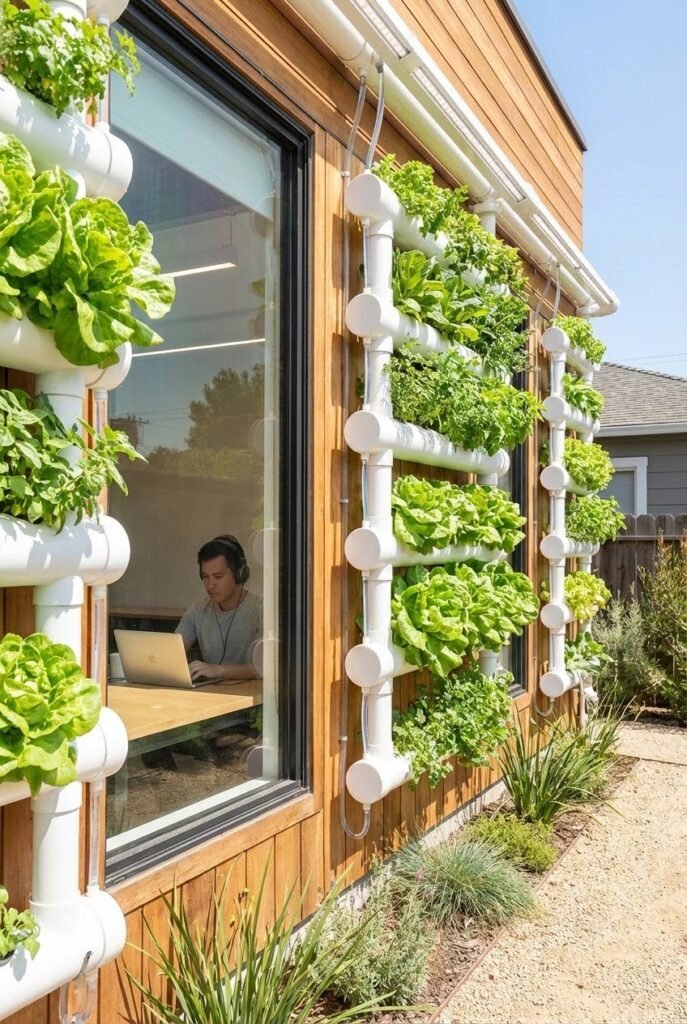
The traditional allotment or vegetable patch, while romantic, imposes significant demands on time—a commodity the busy professional cannot spare. This is where the innovation of the Automated Hydroponic Wall delivers a necessary solution. We are specifically advocating for robust, aesthetically integrated systems mounted directly onto the exterior cladding, typically Western Red Cedar or Larch, of the garden office. These walls operate using Nutrient Film Technique (NFT), circulating a thin, highly concentrated film of water and mineral nutrients over the plant roots.
This soilless cultivation methodology offers a trifecta of benefits:
- Accelerated Growth: Crops typically mature 30% faster than their soil-grown counterparts due to the precise delivery of nutrients and oxygen to the root zone.
- Resource Conservation: NFT systems can reduce water consumption by up to 90% compared to traditional field agriculture.
- Zero Maintenance: The automated nature of the system eliminates the need for manual weeding, tilling, or pest management, freeing the user from “dirt time” and ensuring a clean, professional environment. The integration of a small, discreet sensor system can also monitor pH and EC (Electrical Conductivity) levels, notifying the user via a desktop app if the nutrient profile requires adjustment.
The “Office Salad” Selection: Bio-Hacking the Workday
The selection of crops for the Hyper-Proximity environment is meticulously curated not just for flavour, but for specific, evidence-based cognitive-boosting properties. The 2025 “Power-Lunch” planting list is designed to actively counter common mid-workday stressors and cognitive deficiencies:
- Rocket (Eruca sativa) & Mustard Greens (Brassica juncea): These highly bioavailable leafy greens are exceptional sources of nitrates. Ingestion leads to the production of nitric oxide, a powerful vasodilator that improves blood flow, specifically to the pre-frontal cortex of the brain, thereby enhancing focus and decision-making during demanding tasks.
- Pea Shoots (Pisum sativum): These young, tender shoots are nutrient powerhouses, particularly dense in Vitamins C and E. These antioxidants are crucial in mitigating the effects of “Screen-Eye” fatigue and the oxidative stress induced by prolonged exposure to digital screens and blue light. Their consumption acts as a natural, edible defence for ocular health.
- Spinach (Spinacia oleracea): The high folate content in spinach is essential for the synthesis and regulation of key neurotransmitters, specifically dopamine and serotonin. Maintaining optimal levels of these compounds is critical for emotional regulation, acting as a crucial buffer against the acute stress spikes commonly experienced during high-stakes video calls or project deadlines.
Startup Idea: “Seed-to-Shed” Subscriptions – Nature as a Service (NaaS)
The transition to mass adoption of this technology opens a lucrative, burgeoning market for a specialised horticultural logistics service. The ideal model is a subscription offering, known as “Seed-to-Shed,” which removes all complexity from the cultivation process.
This service would deliver pre-germinated hydroponic plugs—seedlings already established in inert media like rockwool or coco coir—specifically tailored to the dimensions and environmental conditions of leading garden office systems.
Key Features of the NaaS Model:
- Bi-Weekly Rotation: Subscribers receive a fresh tray every two weeks, ensuring a continuous, non-interruptible supply.
- Orientation-Specific Cultivation: The crops delivered are pre-grown under light conditions (e.g., intensity, duration) that match the office’s specific cardinal orientation (North, South, East, West), guaranteeing optimal performance upon installation.
- Seamless Integration: The user simply removes the spent crop, plugs the new modules into the Automated Hydroponic Wall, and begins harvesting the fresh “office salad” from Monday through Friday.
This is the ultimate evolution of convenience, positioning nature itself as a manageable, on-demand utility: Nature as a Service (NaaS).
Conclusion: The 15-Minute Reset – Thriving, Not Just Working
The final, and arguably most profound, benefit of Hyper-Proximity Nutrition is the psychological and physiological reset it provides. The routine of harvesting one’s lunch necessitates a brief but critical interruption of the continuous cognitive load. Stepping away from the ambient hum of the air-conditioned pod, experiencing the external sensory input—the crisp March breeze, the scent of fresh greens, the physical act of picking and preparing one’s food—triggers a sensory shift. This micro-break is a potent biological defence mechanism that actively “defends” the brain against the insidious creep of the mid-afternoon slump, improving alertness and creativity. In 2025, the garden office is fundamentally redefined: it is no longer merely a place of professional labour; it is an integrated ecosystem where focused work and personal well-being intersect, ensuring that the professional doesn’t just work, but thrives.