


Thresholds for Home-Based Directors
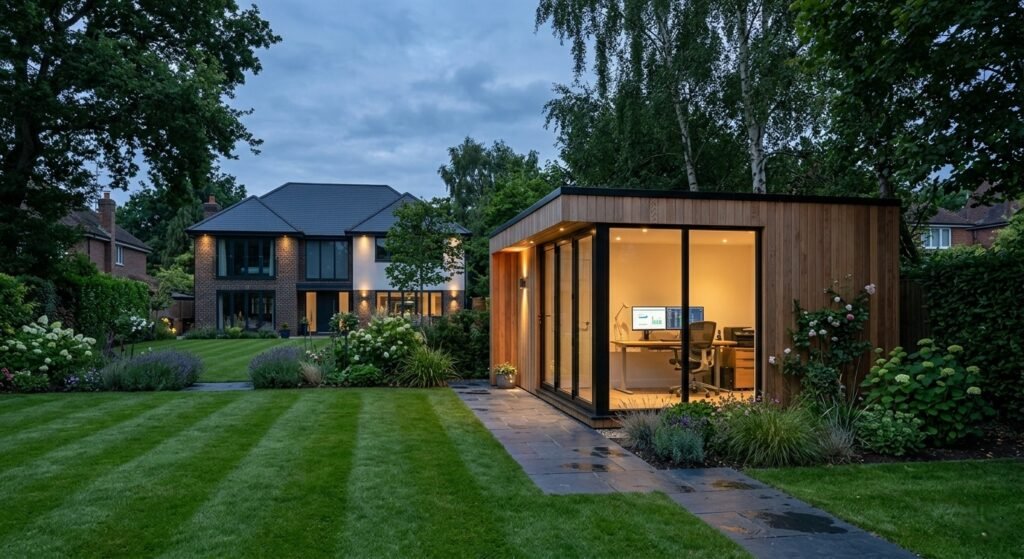
For the independent limited company director, the garden office is far more than a stylistic choice; it is the modern corporate headquarters. Yet, as the financial year progresses, managing the delicate balance between business growth and tax efficiency requires a sharp analytical focus. With UK corporation tax brackets demanding careful navigation, mid-year is the ideal time to review your thresholds, assess your capital allowances, and ensure your remote operation remains as fiscally streamlined as it is architecturally elegant.
Here is a rigorous guide to managing your mid-year corporate tax planning from the comfort of your garden studio.
Understanding the 2026 Threshold Landscape
As a director, your primary benchmark is the dividing line between HMRC’s Small Profits Rate and the Main Rate of corporation tax. With the lower rate set at 19% for profits up to £50,000 and the main rate scaling up to 25% for profits exceeding £250,000—with a tapered marginal relief rate applied in between—mid-year profit forecasting is essential.
If your company’s profits are tracking toward a threshold transition, unexpected revenue spikes in the third or fourth quarters can inadvertently push you into a higher tax band. A mid-year audit allows you to project your end-of-year position precisely, giving you a valuable window to deploy legitimate mitigation strategies before your accounting period closes.
Capital Allowances: Maximising Inside-Out Investment
One of the most effective ways to manage a rising profit threshold is through strategic corporate reinvestment. However, when it comes to a garden office, HMRC draws a firm, uncompromising line between the physical structure and the business infrastructure inside it.
1. The Structure vs. The Asset
It is a common misconception that a limited company can fully offset the initial construction costs of a garden room against corporation tax. HMRC views the structural shell (the walls, roof, and flooring) as a capital building asset rather than “plant and machinery.” Consequently, the building itself does not qualify for the Annual Investment Allowance (AIA).
2. The Internal Infrastructure Focus
Where home-based directors can find significant tax efficiency is in the internal fit-out. The hardware, technology, and specialized systems required to operate an enterprise-grade workspace from your garden are fully eligible for the AIA, allowing you to deduct 100% of the cost from your taxable profits in the year of purchase.
If you are tracking toward a higher tax threshold mid-year, consider bringing forward planned investments in high-performance equipment. Eligible items include:
- Enterprise-grade connectivity and tech: Advanced 6G routing systems, server arrays, and dual-monitor workstations.
- Thermal and climate control: The installation of energy-efficient air-source heat pumps or specialized climate systems unique to the workspace.
- High-performance ergonomics: Professional-grade task chairs (such as the Herman Miller Embody) and actuated standing desks that directly support operational endurance.
- Electrical and acoustic installations: Recessed LED tracking, dedicated structural wiring, and integrated acoustic dampening panels.
By optimizing these investments before a key quarter ends, you naturally lower your net taxable profit, keeping your company safely within more favorable tax bands while substantively upgrading your working environment.
Running Costs and the ‘Licence to Occupy’
Beyond capital investments, mid-year is an excellent time to formalize how your company reimburses you for operating from residential grounds.
Rather than relying on flat-rate homeworking allowances, which may not truly reflect the utility demands of a fully functional, climate-controlled garden studio, directors can establish a formal Licence to Occupy (a commercial rental agreement) between themselves as individuals and their limited company.
Under this arrangement, the company pays a market-justified rent to you for utilizing the garden office space. This rent is a tax-deductible expense for the company, effectively reducing its corporation tax liability.
Note: While this reduces corporate profits, the rental income must be declared on your personal Self-Assessment tax return. Furthermore, to safeguard your future Capital Gains Tax position and preserve your Private Residence Relief when you eventually sell your home, the rental agreement should specify that the space is not used exclusively for business outside of working hours.
Strategic Profit Extraction Adjustments
Finally, if your mid-year projections indicate that corporate profits will inevitably cross a threshold, you have the flexibility to adjust your personal extraction strategy.
- Corporate Pension Contributions: Direct employer pension contributions from your limited company into your personal pension scheme are generally treated as an allowable business expense. They are entirely free from corporation tax and national insurance, making them one of the cleanest methods to manage a threshold spike while securing long-term wealth.
- Salary vs. Dividend Rebalancing: Review your personal income requirements. If the company is approaching a marginal tax relief boundary, it may be prudent to retain a portion of the profits within the business reserves to fund next year’s corporate expansion, rather than issuing dividends that trigger high personal tax rates alongside corporate liabilities.
Summary: The Forward Path
A successful garden commute is built on foresight. By taking a proactive approach to your corporation tax position mid-year, you convert potential tax liabilities into structured, premium business assets. Consult with your accountant to map out your current profit trajectory, isolate your eligible internal capital allowances, and ensure your workspace remains a blueprint for executive efficiency.
Last updated: 18 May 2026