

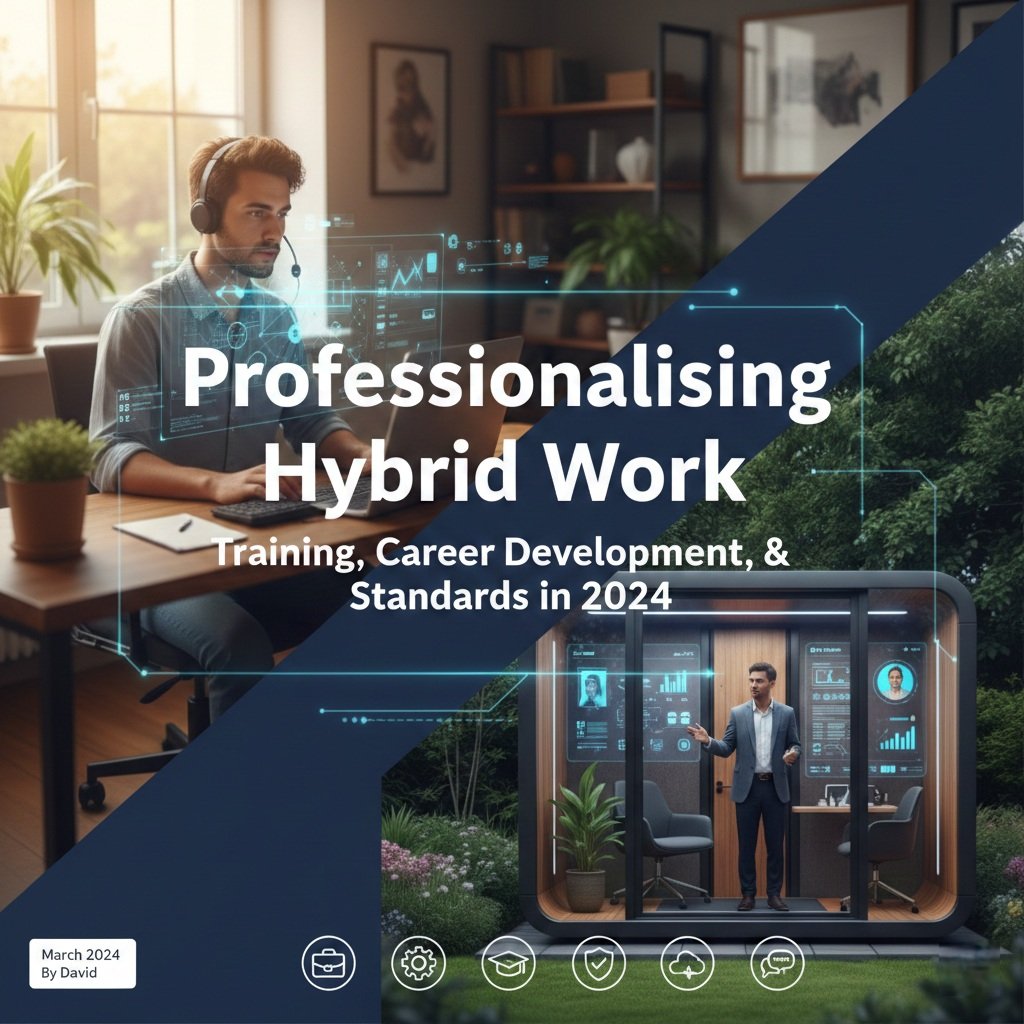
Training, Career Development, and Standards in 2024
March 2024
Categories: Business & Professional Development
Tags: hybrid work, professionalisation, career development, training, remote workers
As we settle into 2024, hybrid working in the UK is no longer experimental. Organisations have moved from trial-and-error to codified practices, while employees are adapting to new professional norms. This month, we focus on the professionalisation of hybrid work — how training, career development, and standards are shaping the landscape for both seasoned hybrid employees and those entering remote work for the first time.
Defining Professional Standards in Hybrid Work
Professionalism in 2024 hybrid work is about more than simply showing up. With employees distributed across homes, garden offices, and hybrid setups, standards now focus on:
- Output and results rather than visibility
- Digital etiquette and communication norms
- Reliability, accountability, and collaboration
For first-time remote workers, understanding these standards can be challenging. Without traditional office cues, early guidance is critical to ensure integration into team culture and alignment with organisational expectations.
Professional credibility in hybrid environments is earned through clear communication, consistent delivery, and engagement — not physical presence.
Training and Onboarding: Building Confidence Early
Organisations are investing in structured onboarding programs for hybrid and remote work, recognising that first-time remote employees need tailored support. These programs cover:
- Technology and collaboration tools, including AI-assisted platforms and secure cloud systems
- Workspace setup and ergonomics, ensuring productivity and wellbeing
- Communication practices and meeting etiquette
- Time management, task prioritisation, and digital wellbeing
Seasoned hybrid professionals also benefit from ongoing refresher training on emerging tools, cybersecurity protocols, and collaboration platforms. Structured training fosters consistency, reduces errors, and promotes confidence across teams.
Career Development in a Hybrid World
Career progression in hybrid environments is increasingly skill- and performance-based. Organisations are shifting focus to:
- Demonstrable outcomes and project achievements
- Effective cross-location collaboration
- Digital leadership and mentoring capabilities
For first-time remote workers, building a portfolio of work and actively engaging in internal and external professional communities is critical. Employers are supporting this by offering mentorship programs, skill-building workshops, and access to online learning platforms.
Hybrid professionals who actively manage their visibility, communication, and skill development are more likely to succeed in remote-first environments.
Integrating Lifestyle, Technology, and Professionalism
Professionalisation does not exist in isolation. Successful hybrid workers combine technology adoption, structured routines, and wellbeing practices with professional standards. For example:
- Smart garden offices and connected home workspaces allow employees to maintain focus while reducing distractions
- AI-assisted productivity tools streamline workflow and provide actionable insights
- Clear routines and micro-breaks mitigate digital fatigue
This integration ensures that employees remain productive, engaged, and healthy, while simultaneously meeting organisational expectations.
Supporting First-Time Remote Professionals
2024 sees an influx of newcomers to hybrid work — graduates, freelancers, and small business employees. They require:
- Guidance on professional norms and hybrid expectations
- Access to tools, training, and technology to perform effectively
- Inclusion in community networks for support, mentoring, and knowledge sharing
Companies that invest in early-stage training and mentorship accelerate integration, boost confidence, and cultivate a culture of professionalism.
Looking Ahead
Professionalisation is now the hallmark of sustainable hybrid work. In 2024, the most successful organisations are those that standardise expectations, provide ongoing training, and support career development for all employees, regardless of location or experience level.
For first-time remote workers, the opportunity is significant. With structured guidance, smart workspaces, and access to professional networks, newcomers can quickly achieve credibility, productivity, and career growth. For seasoned hybrid professionals, 2024 offers a chance to refine skills, adopt new technologies, and solidify long-term career trajectories.
Hybrid work is no longer a temporary adjustment — it is a professional ecosystem, where standards, training, and development define success.
Last updated: 23 February 2026