


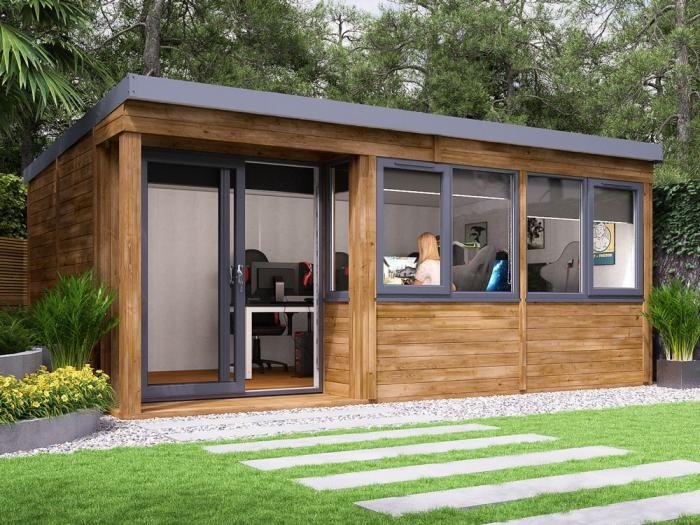
Meet the Pioneers of Backyard Working
Categories: Case Studies & Stories
Tags: interviews, freelancers, garden offices
Before garden offices became a talking point, they were a curiosity.
A slightly unusual solution spotted at the end of a neighbour’s lawn. A conversation-starter at barbecues. Often followed by the same question: “Isn’t that just a shed?”
But for a small and growing group of UK workers, building an office in the garden wasn’t about novelty. It was about necessity.
These early adopters didn’t set out to make a statement about the future of work. They were simply trying to solve very ordinary problems.
Working From Home, But Not Really
For many of the people who moved their work into the garden, the journey started indoors. Spare bedrooms doubled as offices. Kitchen tables became desks. Laptops travelled from room to room in search of quiet.
James, a freelance digital consultant based in the Midlands, describes it plainly.
“I was technically working from home, but I never felt like I’d arrived at work — or left it, for that matter.”
Client calls clashed with family life. Paperwork spread beyond the desk. Evenings blurred into working hours. What began as flexibility slowly became friction.
The Decision to Build
The move to a garden office was rarely impulsive. Most describe months — sometimes years — of hesitation. Cost, planning questions, and a nagging sense that it might be indulgent all played a role.
Sarah, a self-employed designer in the South East, recalls the tipping point.
“I realised I was planning my work around the house, instead of the other way round. That didn’t feel sustainable.”
For her, the garden office wasn’t about escaping the home, but protecting it. A way to keep work contained, both physically and mentally.
A Short Commute With Real Impact
Almost everyone mentions the same unexpected benefit: the commute.
Not the time saved — though that matters — but the ritual. Stepping outside. Unlocking a door. Sitting down with intention.
“It’s about twenty steps from my back door,” one interviewee laughed, “but it’s enough to switch my head into work mode.”
That small separation created structure. The day had a clearer beginning and end. Work stayed at work, even if work was only metres away.
Professional Space, Personal Scale
Another recurring theme is professionalism. For freelancers and consultants especially, appearances matter. Video calls, client meetings, and focused conversations all benefit from a space designed for work rather than adapted to it.
Garden offices offered:
- Fewer interruptions
- Better sound control
- A neutral, professional backdrop
- Room for proper desks and seating
Just as importantly, they offered confidence. Several early adopters mentioned feeling more legitimate — both to clients and to themselves.
Not a Lifestyle Statement
What’s striking is how little lifestyle aspiration features in these stories. There’s no talk of trends or status. No interest in making a point.
These are practical people making pragmatic decisions.
Parents trying to balance school runs with deadlines. Consultants tired of long drives to short meetings. Creatives who needed quiet to think. Small business owners who had simply outgrown the corner of the spare room.
“It wasn’t about upgrading my life,” one interviewee put it. “It was about making work manageable.”
Quietly Ahead of the Curve
In 2018, garden offices still sit outside the mainstream. They’re occasionally misunderstood, sometimes dismissed, and often underestimated.
But among those already working this way, there’s a sense that they’ve stumbled onto something valuable. Not a revolution, but an improvement. A better fit between work and the rest of life.
They don’t see themselves as pioneers. They were just willing to try something different before it had a name.
And in doing so, they may have offered a glimpse of where everyday work is heading next.
Last updated: 9 February 2026