


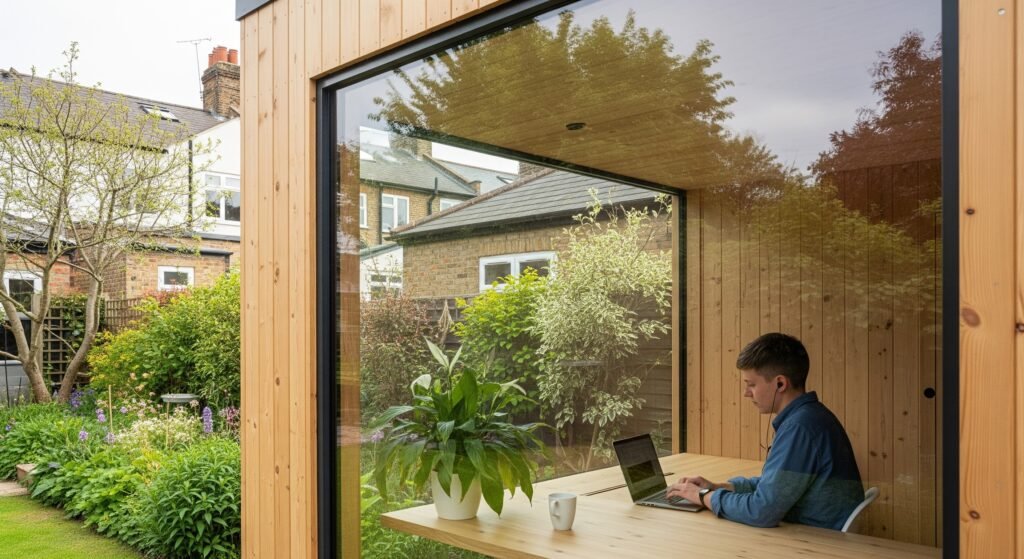
Practical techniques for harnessing the environment of the garden office to achieve sustained periods of deep work. Topics include the science of ambient sound (e.g., pink/brown noise), the power of biophilic design elements (natural textures, views, light), and scheduling for peak concentration.
This guide delves into the practical science of optimizing your garden office environment to consistently achieve and sustain periods of deep, uninterrupted work—a state often referred to as “flow.” By meticulously controlling the sensory inputs of your workspace, you can trigger neurological responses that enhance concentration and productivity far beyond conventional office settings.
Harnessing the Science of Ambient Sound:
The right auditory backdrop is a powerful, yet often overlooked, tool for blocking distracting environmental noise and promoting cognitive focus. We will explore:
- Pink Noise and Brown Noise: Moving beyond simple white noise, we examine the spectral density and neurological effects of pink noise (a balanced, natural sound like rain or waterfalls) and brown noise (deeper, lower frequencies like a steady roar or ocean waves). Learn how these specific frequencies can smooth out the peaks and valleys in brainwave activity, promoting a more stable and focused mental state.
- Acoustic Masking: Techniques for utilizing ambient sound to effectively “mask” unpredictable and distracting noises—such as sirens, conversations, or traffic—by raising the overall ambient sound floor to a non-intrusive level.
- Equipment and Delivery: Recommendations for high-quality, non-looping sound generators, open-back headphones, and speaker placement to ensure an immersive and non-fatiguing auditory experience tailored for sustained concentration.
The Power of Biophilic Design Elements:
Biophilia—the innate human tendency to seek connection with nature and other forms of life—provides a potent framework for designing a restorative and productivity-enhancing workspace. The garden office’s inherent connection to nature makes it the ideal location to leverage these principles:
- Natural Textures and Materials: Integrating materials like untreated wood, stone, and natural fibers into the interior design. Research shows that exposure to these elements can lower heart rate and blood pressure, reducing stress and enhancing comfort.
- Strategic Views of Nature: Optimizing desk and window placement to provide unobstructed, dynamic views of the garden. The presence of living greenery and natural movement has been shown to reduce mental fatigue and accelerate ‘attentional restoration.’
- Optimizing Natural and Circadian Lighting: A detailed look at maximizing natural daylight (full-spectrum light) and utilizing dynamic lighting systems that mimic the sun’s cycle. Proper circadian lighting supports the body’s natural sleep-wake rhythm, improving daytime alertness and long-term mood. This includes positioning your workspace to minimize glare while maximizing useful daylighting.
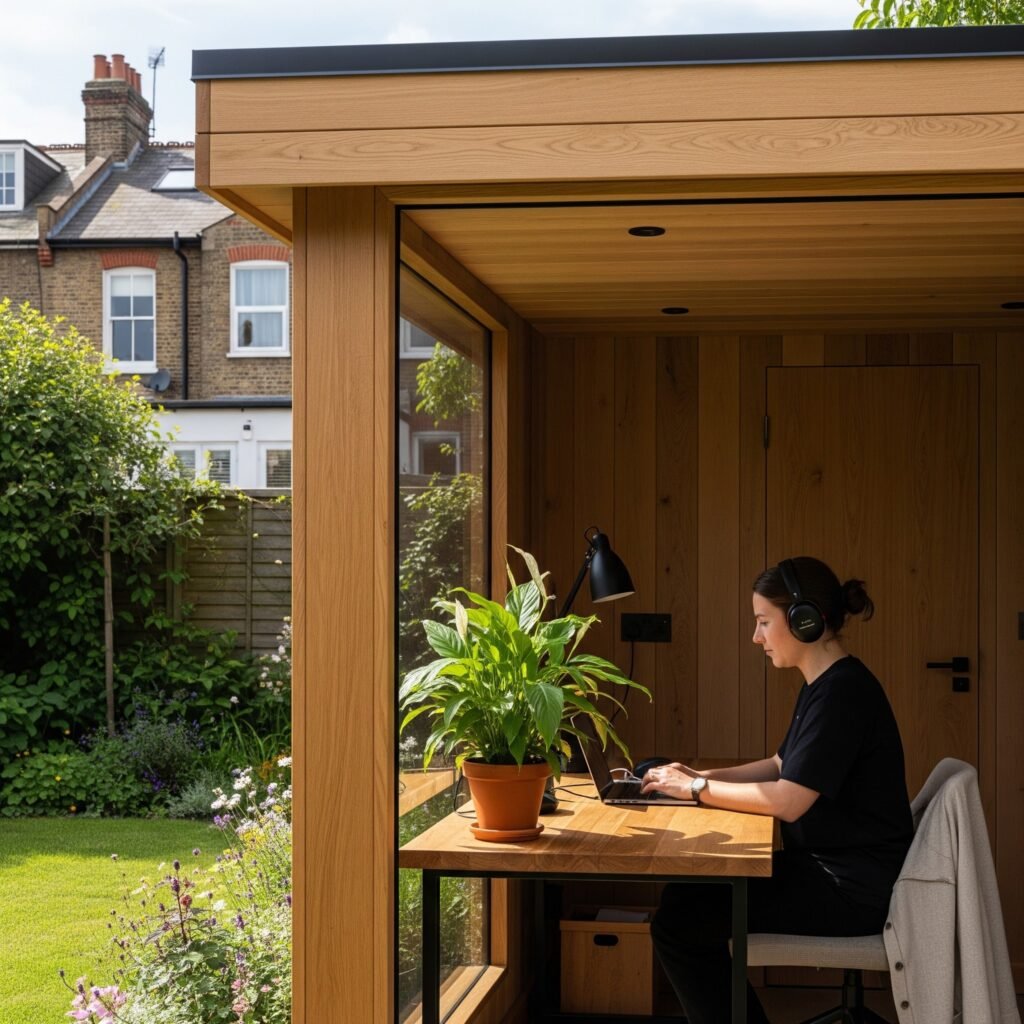
Structuring for Peak Concentration:
Achieving deep focus is not just about environment; it’s about disciplined scheduling and ritualizing the transition into flow.
- The Deep Work Block: Implementing dedicated, uninterrupted blocks of 90 to 120 minutes specifically reserved for high-value cognitive tasks, with strict elimination of all digital distractions (notifications, email checks, social media).
- The Transition Ritual: Creating a personal ritual to signal to the brain that a deep work session is beginning—this might involve putting on specific ambient sound, preparing a focused beverage, or a brief mindfulness exercise.
- The Restorative Break: The importance of short, restorative breaks that leverage the garden environment. We explore the benefits of ‘micro-breaks’ involving a brief walk or exposure to the green space to refresh the prefrontal cortex and maintain focus throughout the day.