


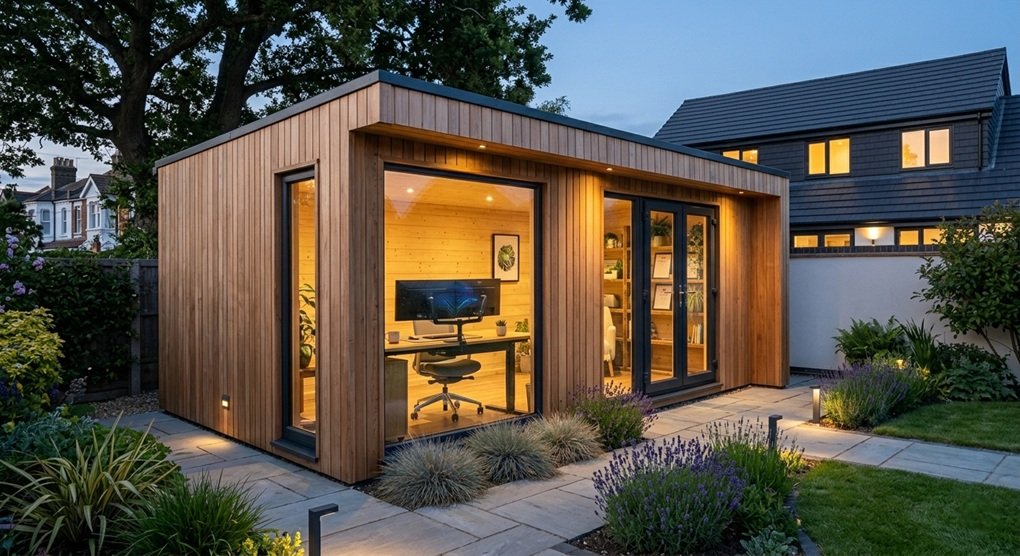
Reviewing Enterprise-Grade 6G Routers for Detached Structures
For the professional operating from a garden studio, a flawless internet connection is the literal lifeblood of daily operations. There is nothing quite like the frustration of dropped Zoom calls or stuttering file uploads while trying to hit a tight deadline. While standard residential routers do a passable job inside the main house, projecting a high-frequency signal across a lawn and through the multi-layered insulation of a modern timber pod introduces unique, demanding structural challenges.
As forward-looking 6G hardware and advanced multi-link Wi-Fi 7 enterprise systems establish themselves in the UK market, we put the latest generation of ultra-wideband routers through their paces. We specifically tested how these cutting-edge high-frequency signals penetrate foil-backed insulation, double glazing, and sustainable cedar cladding.
The Cladding Obstacle: Why Garden Offices Kill Wireless Signals
Many remote professionals assume that because their garden office is only twenty meters from the back door, wireless connectivity should be a breeze. In reality, the very materials that make a premium timber room comfortable and eco-friendly are an absolute nightmare for ultra-fast, high-frequency network bands.
- Foil-Backed Insulation Panels: Modern premium pods rely on high-performance PIR insulation boards. The metallic foil backing on these panels effectively turns your garden studio into a partial Faraday cage, reflecting and scrambling incoming high-frequency signals.
- Acoustic and Thermal Double Glazing: High-end glass panels often feature microscopic metallic oxide coatings designed to reflect heat. Unfortunately, they are equally adept at reflecting wireless data packets.
- The High-Frequency Trade-off: The latest ultra-wideband networks deliver staggering speeds, but their shorter wavelengths struggle immensely to pass through solid physical structures compared to legacy, slower bands.
Network Architecture: Wired Backhaul vs. Wireless Mesh
To get enterprise-grade speeds into a detached structure, we evaluated the two primary structural deployment methods available to UK homeowners.
Option 1: The Hardwired Ethernet Backhaul (The Gold Standard)
This method involves running a physical, exterior-grade Cat6a or fibre-optic cable from the main house router, down a trench or along a boundary wall, directly into the garden studio’s access point.
- Pros:
- Delivers 100% of your subscribed broadband speed with zero signal degradation.
- Completely unbothered by external weather conditions, foil insulation, or thick cedar timbers.
- Provides the absolute lowest latency (ping), which is vital for real-time video conferencing, cloud editing, and remote server access.
- Cons:
- Requires physical disruption to the garden, including lifting paving stones or trenching through a mown lawn.
- Higher initial installation cost, often requiring a professional data engineer or electrician.
Option 2: Advanced Multi-Link Wireless Bridges (The Zero-Dig Alternative)
For setups where digging up a manicured town garden isn’t an option, the newest enterprise routers utilize Multi-Link Operation (MLO). This allows the router in the house and the node in the studio to aggregate multiple wireless frequencies simultaneously, dynamically switching bands to dodge interference.
- Pros:
- Completely plug-and-play with zero physical disruption to your garden landscaping.
- Latest intelligent beamforming technology actively steers the signal toward the glass doors or windows of the pod to bypass insulation walls.
- Exceptionally fast setup time, allowing you to be up and running within minutes via a smartphone app.
- Cons:
- Peak throughput drops slightly when processing data through structural exterior walls.
- Ambient interference from neighboring residential networks can cause minor, sporadic spikes in latency during peak evening hours.
Performance Verdict and Deployment Strategy
If you are treating your garden office as a serious corporate headquarters, relying on a basic domestic Wi-Fi extender simply won’t cut it.
If your garden layout allows for a discreetly buried conduit, investing in a hardwired Cat6a backhaul connecting to a dedicated internal access point is always the superior long-term choice. It guarantees future-proof, gigabit-plus stability regardless of how thick your timber walls are.
However, if you must go wireless, look exclusively for enterprise-tier hardware that boasts dedicated multi-link capabilities and adjustable high-gain external antennas. By mounting an unreactive, weather-sealed node to the exterior cladding of your pod, you can successfully bypass the “Faraday cage” insulation trap entirely, bringing pristine, commercial-grade connectivity straight to your desktop.