


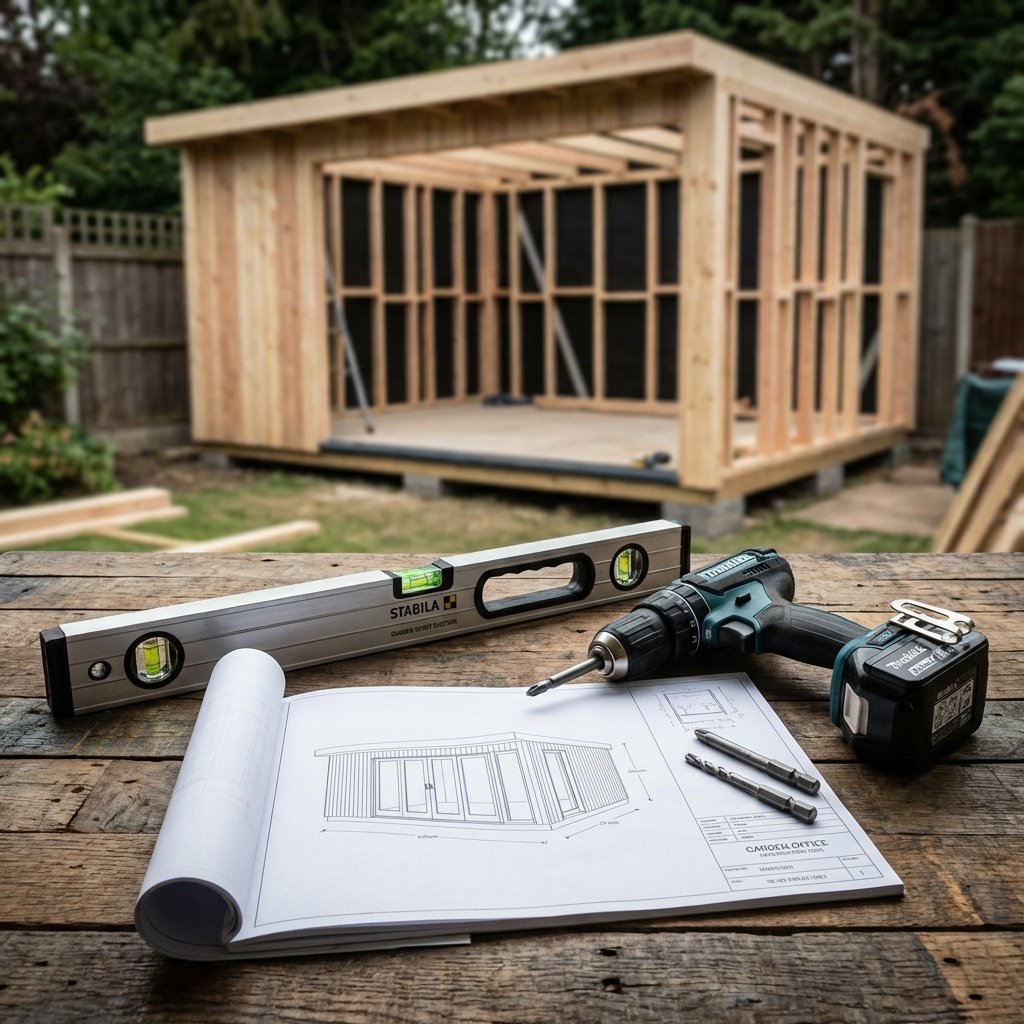
Eco-Friendly Office Pods Begin to Bloom
Categories: Sustainability
Tags: eco design, low impact buildings
Sustainability rarely announces itself with a grand gesture. More often, it arrives quietly — in smaller buildings, smarter materials, and decisions that prioritise long-term impact over short-term convenience.
In recent years, eco-friendly design has edged steadily into the mainstream of UK housing. Better insulation, more efficient heating systems, and growing interest in renewable energy are no longer confined to experimental builds or rural self-sufficiency projects. They are becoming part of everyday conversations.
Now, that same thinking is beginning to shape a new kind of workspace: the garden office.
Small Buildings, Smaller Footprints
At first glance, adding another structure to a property might seem counterintuitive from an environmental perspective. But proponents of garden offices argue the opposite.
Compared with traditional home extensions or daily commuting, a small, well-designed office pod can represent a relatively low-impact solution. Most are modest in size, require minimal groundworks, and can be built off-site, reducing waste and disruption.
Sustainability isn’t always about doing more — sometimes it’s about building less, but building better.
In a country where space is limited and planning considerations are complex, compact buildings have clear advantages.
Materials Matter
One of the most noticeable shifts in the garden office market has been a growing emphasis on materials. Timber construction, in particular, has gained traction, driven by both environmental concerns and aesthetic appeal.
Many manufacturers now highlight:
- Responsibly sourced or FSC-certified timber
- High-performance insulation to reduce heat loss
- Double or triple glazing for year-round use
- Durable finishes designed to last decades, not seasons
These choices reflect a broader move within UK construction towards longevity and efficiency, rather than quick, disposable builds.
Energy Use and Everyday Reality
Eco-friendly design only works if it functions in real life. A workspace that’s too cold in winter or unbearably warm in summer quickly loses its appeal — and its environmental credentials.
As a result, attention is shifting towards practical energy efficiency. Well-insulated garden offices can often be heated with minimal energy input, particularly when compared to larger parts of the home. Some owners are beginning to experiment with low-energy heating, efficient lighting, and, in a small number of cases, solar panels.
The greenest workspace is often the one that’s comfortable enough to use properly, all year round.
There’s also an emerging conversation about usage patterns. A dedicated workspace that’s occupied during working hours and unused the rest of the time can be easier to heat and manage efficiently than a multi-purpose room in constant use.
Reducing the Commute, Naturally
Perhaps the most compelling environmental argument for garden offices is also the simplest: fewer journeys.
According to UK transport data, commuting remains a significant contributor to daily emissions, particularly for those travelling by car. By enabling people to work from home without sacrificing productivity or professionalism, garden offices quietly reduce the need for regular travel.
This isn’t about grand claims of carbon neutrality. It’s about incremental change — one less car journey, one less train trip, repeated week after week.
Closer to Nature, By Design
There’s an irony worth noting. Many people who move their work into the garden report becoming more aware of their surroundings. Seasonal changes, daylight patterns, weather, and wildlife become part of the working day rather than something observed through a window at a distance.
That proximity often reinforces the desire to build responsibly.
When your office sits among plants rather than traffic, environmental choices feel less abstract.
This connection may be subtle, but it aligns neatly with broader UK conversations around wellbeing, green spaces, and the role of nature in daily life.
A Practical Kind of Sustainability
In 2018, eco-friendly garden offices remain a niche within a niche. They’re not a universal solution, nor are they marketed as one. But they reflect a growing willingness to question how we build, how we work, and how those choices intersect.
Rather than chasing perfection, these small structures represent a practical kind of sustainability — one that balances environmental responsibility with everyday needs.
As flexible working continues to evolve, it’s likely that garden offices will play a modest but meaningful role in shaping lower-impact ways of working. Not through radical change, but through thoughtful design, sensible materials, and a quieter approach to progress.
Last updated: 9 February 2026