


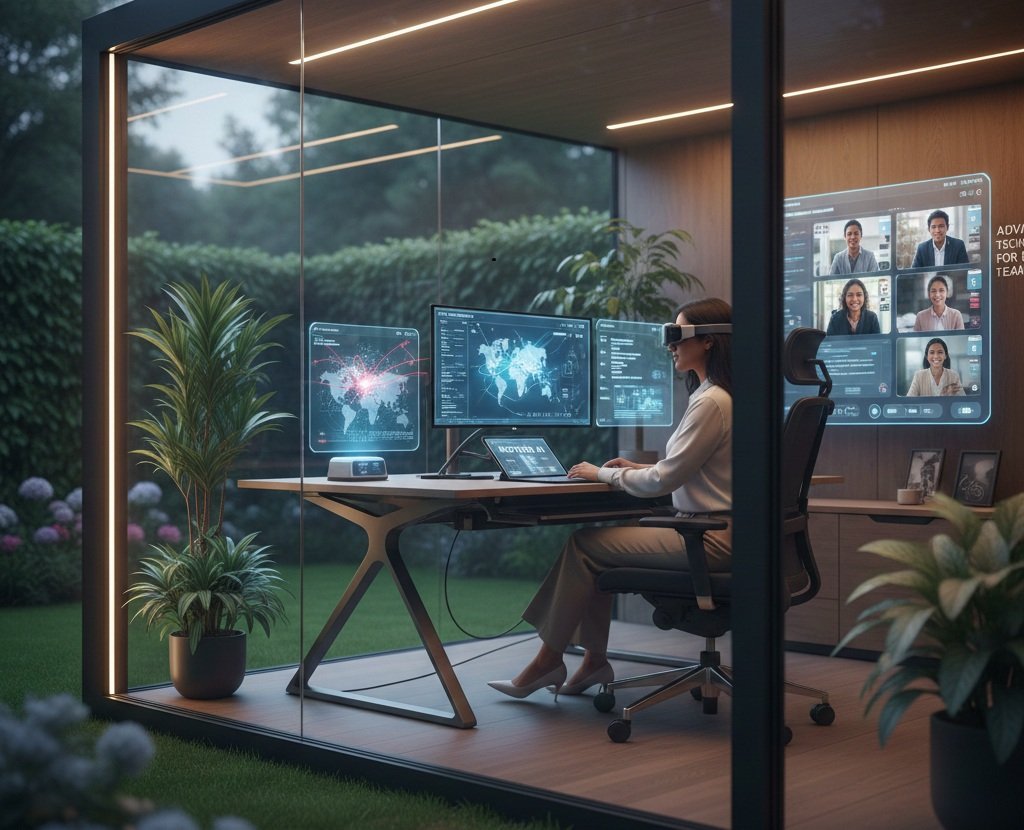
Smart Workspaces and Digital Collaboration in 2024
February 2024
Categories: Technology & Infrastructure / Reviews
Tags: hybrid work, smart offices, AI collaboration, VR/AR, tech adoption
As hybrid working consolidates in 2024, technology is no longer a support function — it is the engine of productivity, collaboration, and professional credibility. For UK teams, both seasoned hybrid professionals and first-time remote workers, the stakes are higher than ever. Companies are investing in smart office setups, AI-assisted collaboration tools, and emerging technologies such as virtual and augmented reality to maintain performance and engagement.
Smart Workspaces: Beyond the Garden Office
The hybrid office is evolving from a basic home setup into a smart, connected environment. Modern garden offices and home workspaces now integrate:
- Adjustable lighting and climate control systems
- IoT-connected desks and monitors that track posture and productivity patterns
- Automated task and meeting reminders embedded into calendars and work platforms
For first-time remote workers, these environments are often a revelation. No longer is remote work a makeshift arrangement; it is a professionally optimised space that mirrors office efficiency while supporting wellbeing. Garden offices equipped with these systems provide an elevated experience, blending comfort, ergonomics, and connectivity seamlessly.
Technology is transforming not just how we work, but where and how our workspaces function.
AI-Assisted Collaboration
Artificial intelligence has become a core component of modern hybrid work. AI assists teams by:
- Automating scheduling across multiple time zones and hybrid locations
- Summarising meetings, generating actionable tasks, and flagging deadlines
- Analysing workflow bottlenecks and suggesting process improvements
Platforms such as Microsoft 365 Copilot, Notion AI, and AI-enabled Slack integrations are increasingly common in UK workplaces. For employees new to remote work, AI tools provide structure and guidance, reducing the learning curve while maintaining high productivity standards.
Virtual and Augmented Reality: Redefining Meetings
VR and AR technologies are moving from experimental to practical applications in 2024. Hybrid teams are using VR to create immersive meeting environments, simulating office collaboration spaces, design reviews, and team workshops. AR overlays allow remote workers to interact with physical objects in shared spaces, enhancing training, presentations, and problem-solving sessions.
While adoption is still limited to organisations with advanced tech budgets, these tools provide a glimpse into the future of hybrid collaboration. For first-time remote professionals, VR and AR platforms offer an immediate sense of presence and engagement that bridges the gap between home and office.
Cybersecurity and Integration
Advanced technology adoption comes with heightened security requirements. Devices, networks, and collaboration platforms must be safeguarded without hampering usability. By 2024, UK organisations are standardising:
- VPNs and zero-trust network architectures
- AI-driven threat detection and real-time alerts
- Secure cloud-based file sharing and version control
Proper onboarding and training are critical for first-time remote workers, ensuring they understand how to maintain security and privacy while leveraging advanced tools.
Product and Service Ecosystem
The 2024 hybrid landscape has created opportunities for an ecosystem of products and services:
- Smart desks, ergonomic chairs, and connected lighting systems
- AI-enabled productivity software and collaboration platforms
- VR/AR headsets and immersive meeting solutions
- Cybersecurity services and managed IT support
Advertisers and service providers have a fertile market. By demonstrating the benefits of these solutions in enhancing productivity, wellbeing, and professionalism, companies can appeal to both organisations and individual remote professionals.
Lessons and Integration
Hybrid technology adoption in 2024 is about more than acquiring devices or software; it’s about integration into workflows, culture, and professional standards. For seasoned hybrid workers, advanced tools enhance efficiency and engagement. For newcomers, they provide scaffolding for productivity, professional credibility, and collaborative participation. Organisations that invest thoughtfully in both technology and guidance see measurable gains in output, satisfaction, and retention.
Advanced technology is not a luxury; it is the professional standard for 2024 hybrid teams.
Looking Ahead
The trend toward smart, AI-assisted, and immersive hybrid work will continue to grow throughout 2024. Garden offices and home workspaces are becoming fully integrated extensions of the corporate ecosystem. Professionals who adopt these tools early, and organisations that support them with training and standards, will gain a competitive advantage.
Hybrid work in 2024 is no longer just flexible — it is intelligent, connected, and professional.
Last updated: 23 February 2026