


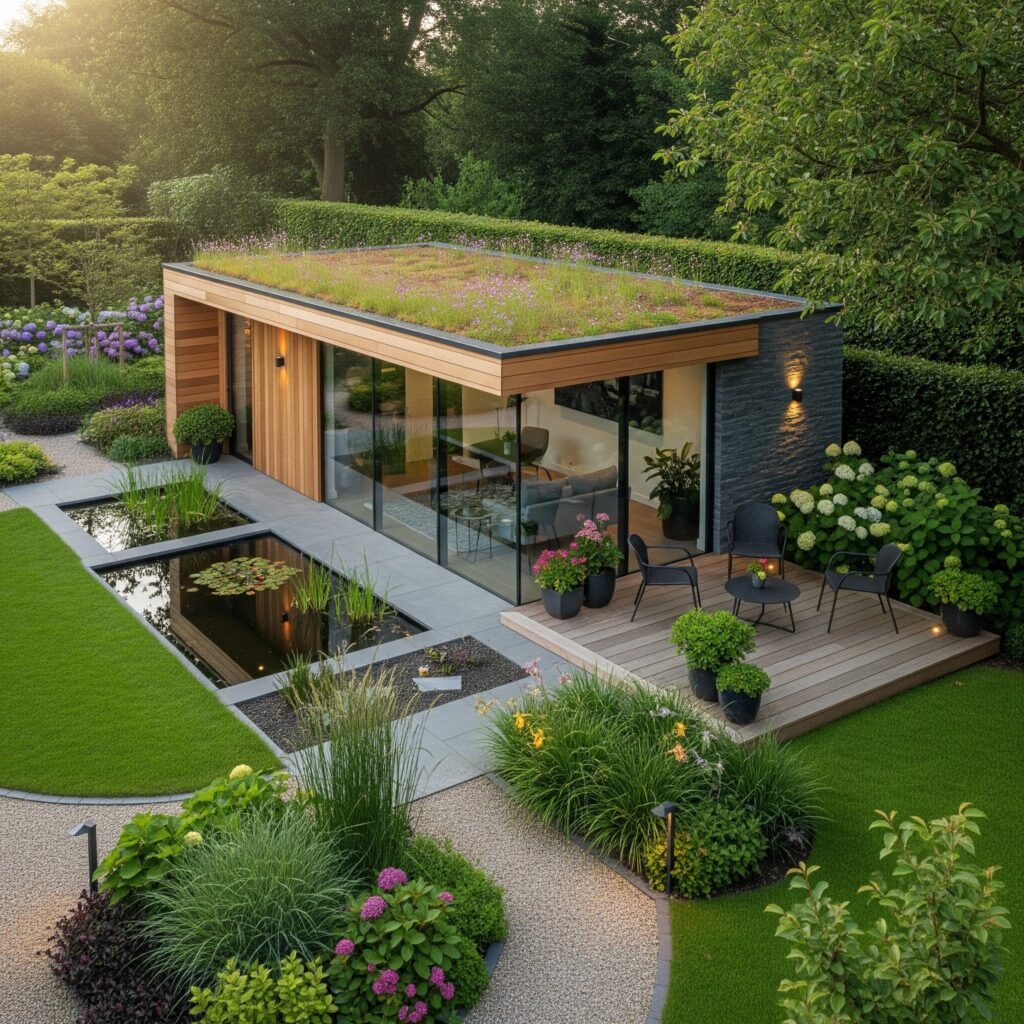
Making the Office Seamless with the Landscape
A comprehensive and expert-level guide to advanced landscape architecture and design, focused on the strategic integration of a garden office structure. The objective is to move beyond simple placement, transforming the built structure into a harmonious, organic component of the garden, thereby enhancing both its aesthetic appeal and its sense of tranquillity and permanence.
Material Harmonisation and Continuity: Weaving the Structure into the Site
Achieving true seamlessness begins with a deliberate, cohesive approach to materials that establishes a visual dialogue between the office, the main residence, and the surrounding natural environment.
- Matching and Complementary Surfaces: The Principle of Echo:
- Local and Native Materials: Prioritise the selection of exterior cladding (walls) and roofing materials that are indigenous to the local region. Utilising natural stone, locally sourced reclaimed timber (e.g., weathered oak or cedar), or shingles creates an immediate, inherent connection. The materials should visibly echo surfaces already present—such as dry-stone walls, a brick patio, or timber fencing—to build a sense of material history and continuity.
- The Living Roof Imperative: A sedum, wildflower, or grass roof is perhaps the single most effective tool for integration. By replacing the impervious building plane with a thriving miniature ecosystem, the roof serves as a fifth elevation that visually and ecologically blends the structure with the surrounding canopy and ground cover. It is a functional component that actively reduces the visual mass of the building.
- Blurring the Threshold: Deconstructing the Boundary:
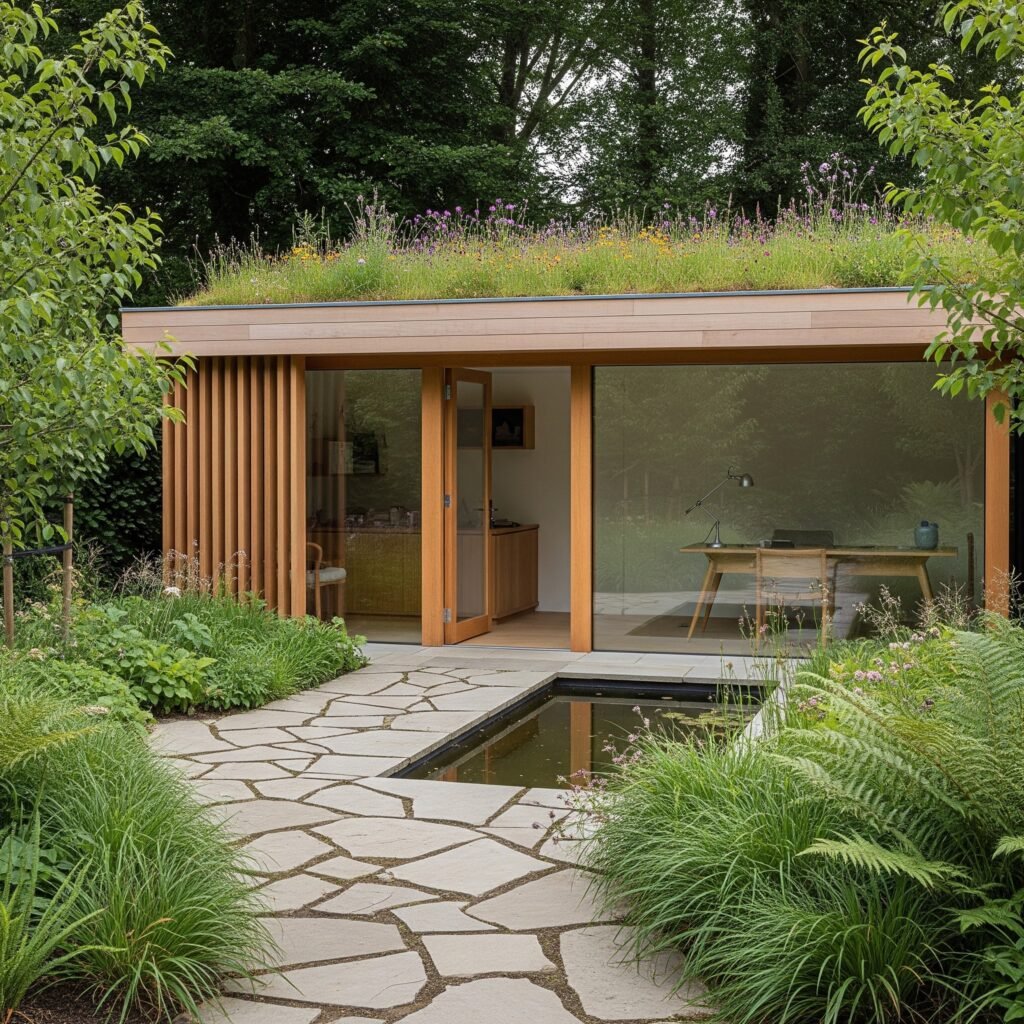
- Paving and Decking Extension: The transition from the garden to the office should be gradual. Extend the primary garden paving material—be it a washed aggregate gravel, large flagstones, or timber decking—right up to the base of the structure. In a more refined approach, the chosen paving can subtly continue under the edge of the building or flow into a concealed drainage channel, making the junction ambiguous.
- Interior-Exterior Flow: Install a threshold-free sliding or bifold door system. Crucially, match or highly complement the interior flooring material (e.g., large format porcelain tiles, continuous poured concrete, or matching wood planks) with the immediate exterior surface. This visual trick encourages the eye to move freely across the boundary, dissolving the harsh distinction between the built interior and the natural world.
2. Strategic Placement of Reflecting Pools and Integrated Water Features
Water, as a dynamic, reflective, and auditory element, can be used architecturally to dematerialise and integrate the garden office.
- Mirroring the Façade: The Illusion of Absorption:
- Shallow, still reflecting pools should be incorporated immediately adjacent to or running along the most prominent face of the office. The still surface of the water acts as a mirror, capturing the sky, the surrounding foliage, and the structure’s façade itself. This reflection visually fractures the mass of the building, making it appear lighter, less imposing, and seemingly absorbed by the immediate environment.
- Psychological and Spatial Enhancement: The presence of water introduces a calming sensory element (sight and sound) while simultaneously creating an illusion of greater depth and space, a particularly valuable strategy in constrained, smaller garden plots.
- Natural Border Definition: The pool effectively establishes a boundary or circulation zone around the office without resorting to the visual harshness or physical obstruction of traditional fences or railings.
3. Designing Pathways, Transitional Structures, and Vertical Planes
The journey to the garden office and its immediate vertical surfaces should be designed to foster a sense of discovery and natural envelopment.
- Organic Movement: The Meandering Approach:
- Avoid direct, straight, and abrupt pathways, which reinforce the office as a distinct, separate destination. Instead, design subtly meandering walkways using soft, permeable materials such as stepping stones set into lawn or shingle, or decomposed granite paths. The path should guide the user slowly, gently revealing the structure rather than announcing its presence immediately.
- Pergolas and Arbours: Creating a Living Canopy:
- Construct timber pergolas, bespoke arbours, or woven willow/metal screens that partially overhang or frame the primary entranceway. These transitional structures, when heavily adorned with fast-growing, fragrant climbing plants (such as wisteria, jasmine, honeysuckle, or grapevines), create a dense, living, green canopy. This organic infrastructure physically and visually merges the built form with the dynamic plant ecosystem, making the entrance feel like a natural opening rather than a constructed doorway.
- Living Walls and Vertical Gardens: Architectural Camouflage:
- Implement high-quality vertical planting systems (living walls) on one or more of the office’s exterior walls, particularly those most visible from the main house or key garden vantage points. A living wall provides exceptional insulation, promotes biodiversity (habitat for insects and birds), and, most critically, instantly disguises the structural wall behind a dense, textured curtain of foliage. This technique seamlessly extends the garden’s vertical plane to encompass the building, making it an integral piece of the garden’s ecology.
4. Softening the Edges with Multi-Layered, Dynamic Planting
Horticultural design must be used actively to blur the juncture where the architecture meets the ground and to control the way the structure is viewed.
- Foundational Planting: The Soft Interface:
- Install deep, generous planting beds immediately around the base of the office. This foundational planting must be dense and textural, utilising shade-tolerant plants (ferns, hostas, dense groundcovers, ornamental grasses). This technique effectively softens the hard, sharp line where the vertical wall cladding meets the horizontal ground surface, visually anchoring the office and dissolving the stark architectural base.
- Canopy and Strategic Screening: Controlled Vistas:
- Use the strategic placement of smaller ornamental trees or large, multi-stemmed shrubs (such as Japanese maples, multi-stemmed birch, or large hydrangeas) to partially screen and frame the office. The planting should be positioned to allow only selective, fleeting glimpses of the structure from key vantage points within the main garden. This creates a powerful sense of a secluded, hidden retreat nestled deep within the foliage.
- Continuous Seasonal Interest:
- Design the entire planting scheme to ensure continuous, changing interest across all four seasons. The garden office should always be surrounded by dynamic colour, evolving forms, and texture. This ensures that the structure remains harmoniously integrated year-round, preventing the scene from becoming visually static during dormant periods.
By adopting these meticulous architectural and horticultural strategies, the garden office is elevated beyond its function as a mere workspace. It transforms into an integrated, harmonious extension of the landscape design, achieving the ultimate goal: to profoundly blur the line between the built environment and the garden, creating a truly seamless, holistic, and enriching space.