

The Internalisation Trend: A Post-Energy-Cap Paradigm Shift
The latest analysis, drawn from the comprehensive April 2026 data released by the UK Garden Building Association (UKGBA), unequivocally signals the end of the ‘Office on a Deck’ phenomenon. This shift is not merely aesthetic; it represents a profound, pragmatic re-evaluation of how we utilise high-value garden space and thermal performance.
For the first time since the rise of the dedicated garden office, the average internal floor space of newly constructed pods has surpassed a critical threshold of 17.5m². This metric correlates directly with a dramatic, structural change in design: the presence of verandas and peripheral timber decking has plummeted by an unprecedented 40% year-on-year. The economic pressures of the post-energy-cap environment, coupled with a sophisticated understanding of interior environmental quality, have prioritised thermal efficiency and maximised usable internal volume. The external clutter of the raised deck is being jettisoned in favour of an approach we term “Internalised Biophilia”—a design philosophy focused on integrating the benefits of nature inside the controlled, insulated workspace, rather than relying on an exposed, often under-utilised external platform.-
The “California Room” Concept: The Aesthetics of Immersion
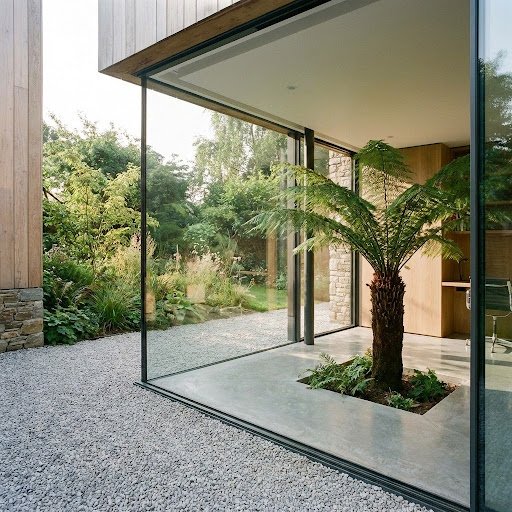
The defining architectural signature of the 2026 commuter pod is the “California Pivot.” This concept fundamentally redefines the liminal space between the working environment and the natural garden. The traditional transitional element—the deck—is replaced entirely by Flush-Threshold Glazing. This technical specification mandates that the internal finished floor level must be precisely matched to the external hard-landscaping material.
By adopting this approach, the hard-landscaping, whether a meticulously laid lawn or a crafted ‘Botanical Bento’ of fine gravel (a trend first identified in our February ’26 report), is brought directly and seamlessly to the edge of the glass. The “Decking Gap”—the thermal bridge and visual barrier inherent in raised timber platforms—is eliminated. This architectural transparency and continuity achieve a powerful psychological effect: a sense of authentic “Immersion.” The occupant is no longer merely sitting next to the garden; they are working within its visual framework, fostering a heightened state of focus and natural integration far superior to the compromised, raised view offered by a conventional deck.
The April “Zero-Deck” Strategic Checklist: Implementing the Shift
The physical removal of the deck necessitates a clear, three-pronged strategy to enhance both the aesthetic and functional performance of the newly integrated office space.
- Gravel-to-Glass: The exposed ground where the deck once stood must be immediately stabilised and re-landscaped. We strongly recommend replacing rotting, high-maintenance timber with a layer of Permeable Self-Binding Gravel. This material provides a crisp, professional, and visually quiet surface, achieving the desired “Botanical Bento” aesthetic. Crucially, its self-binding nature ensures stability and a zero-maintenance profile, while its permeability supports healthy soil ecology and prevents pooling near the threshold.
- Internal Planters: The Subterranean Sanctuary: The loss of external potting space is compensated by a radical re-thinking of internal planting. The trend shifts towards Sunk-In Floor Planters integrated directly into the office’s structural floor slab. These allow for the cultivation of large, architectural plants, such as imposing Monstera deliciosa or structural Ficus lyrata. By allowing these species to appear as if they are growing directly from the office floor, a genuine “Jungle-Office” environment is achieved, significantly boosting internal air quality and biophilic saturation.
- Vertical Edibles: Function Meets Efficiency: The wall space liberated by replacing external French doors with fixed or sliding flush glazing now offers new vertical opportunities. The installation of a compact, automated Hydroponic Herb Frame capitalises on this. With the extended daylight hours of late April, this is the optimal time to initiate a rapid-cycle “Power-Salad” regime, providing fresh, zero-mile herbs and microgreens for daily consumption—a practical expression of the overall commitment to integrated sustainability.
April Planting Palette: The ‘Immersive’ Layer
The external planting strategy must be refined to support the new Gravel-to-Glass aesthetic, providing softness and dynamic colour right at the interface. This palette focuses on creating a dense, integrated visual boundary.
| Plant | Role | Why April? | Notes on Integration |
| Stachys Byzantina (Lamb’s Ears) | Ground-level “Silver Carpet” | Rapidly establishes dense ground cover in early spring. | Its tactile, silvery foliage effectively softens the harsh line where the glazing meets the gravel, absorbing light and reducing visual glare. |
| Ceanothus ‘Victoria’ (Californian Lilac) | Vibrant Blue Vertical Screen/Hedge | Begins its intense, cloud-like blue flowering in late April. | Positioned just beyond the glazing, its vibrant, saturated blue provides an incredible, dynamic backdrop for professional video calls and a powerful contrast to the internal green life. |
| Dicksonia Antarctica (Soft Tree Fern) | Internal/External “Integrated” Plant | New fronds begin unfurling; best time for root establishment. | This is the ultimate 2026 status plant. Positioned adjacent to the glazing (or in the internal sunken planter), its prehistoric structure symbolises the ‘integrated’ pod, blurring the interior and exterior canopy. |
Conclusion: The migration away from external decking is a definitive step in the evolution of the garden office. In 2026, the shift is comprehensive: we are no longer merely “sitting in the garden” while we work; we are actively and deliberately working within a curated, climate-controlled ecosystem. The physical removal of the deck is the final, essential step in making the garden office a permanent, thermally integrated, and truly immersive extension of the home environment.