


The Death of the Deck and the Rise of the Primary Extension
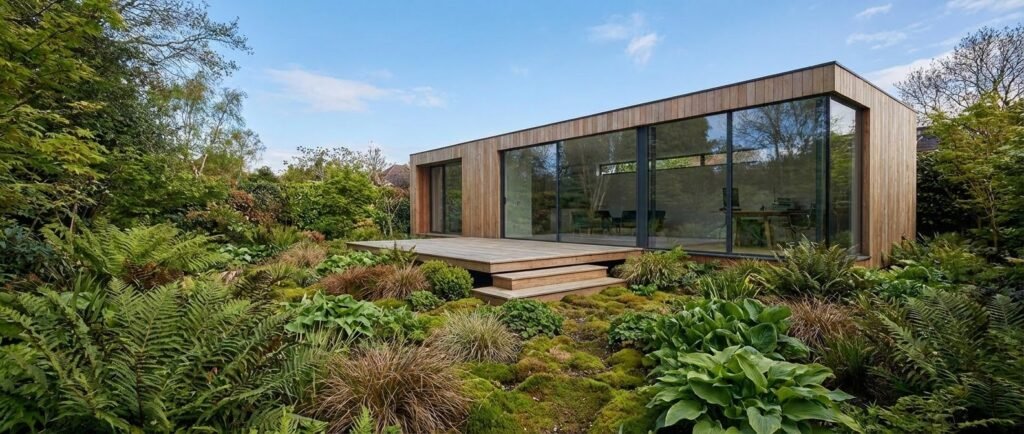
As the Spring Equinox on March 20th marked the true start of the 2026 working year, a seismic shift in garden office architecture has been formally acknowledged: The Death of the Deck. This trend signals a decisive move away from the ‘hobby shed with a porch’ aesthetic towards a fully integrated, primary extension of the main dwelling. Comprehensive data collated from the UK’s leading garden room manufacturers confirms this architectural pivot, showing a significant 12% increase in average interior floor space. The standard footprint has now expanded to a more substantial 17.5m², a gain achieved directly at the expense of external verandas and decking areas. The overriding psychological and financial driver for 2026 is the prioritisation of internal warmth, thermal efficiency, and functional square footage. The garden office is no longer a ‘fair-weather’ annex; it is a critical, year-round workspace where every square inch of insulated, climate-controlled space is valued above external, often underutilised, aesthetic features.
Solar-Ready Landscaping: Optimising the Passive Energy Strategy
In the face of the Bank of England’s sustained 3.75% interest rate hold, the emphasis for remote commuters has shifted dramatically towards lowering operational overheads, particularly energy consumption. This has given rise to the concept of “Solar-Clearance Landscaping.” This is not merely garden maintenance; it is a precise, energy-focused horticultural strategy. It mandates a rigorous March pruning, or in some cases, the removal, of any deciduous trees, tall shrubs, or dense climbers situated within the critical south-facing arc of the garden office. The objective is to ensure that the office’s “Power-Pane” windows (a technology discussed in depth in our June ’25 report), which feature integrated photovoltaic cells, have a completely unimpeded path to the lower, more productive spring sun. By successfully executing this “Solar-Clearance,” owners can anticipate an increase in their passive solar energy generation of up to 25% during the crucial spring months, significantly reducing reliance on grid power.
The March “Internalisation” Checklist: Maximising Function and Focus
The pivot towards internal prioritisation requires an immediate, strategic overhaul of existing garden office setups. Our March checklist guides owners through this essential transition:
- Deck Removal/Conversion (The 2m² Gain): Any underused or purely aesthetic external veranda must be assessed for immediate conversion. The favoured method is “infilling”—enclosing the area with high-performance double or triple-glazing and robust insulation. This seemingly small gain of an extra 2m² of usable internal floor space is statistically critical, often representing the difference between a cramped desk-only setup and the incorporation of a dedicated “Wellness Zone” for light exercise, meditation, or comfortable casual seating away from the primary workstation. This transition fundamentally improves the office’s functionality and mental health offering.
- Visual Silence and Cognitive Load Reduction: The planting immediately outside the office window is now considered an extension of the interior décor. The trend dictates a move away from high-stimulation, vibrant spring flowers (e.g., daffodils, tulips) which can be a source of distraction. They are being replaced by plants that promote “Visual Silence”—a monochrome, architectural green backdrop. Recommended species include non-invasive Fargesia Bamboos and various Evergreen Ferns. This dense, uniform green tapestry is proven to reduce cognitive load, allowing for deeper concentration and a more professional, less visually ‘noisy’ background during high-stakes video calls.
The Equinox Reset: Immediate Maintenance for Peak Efficiency
Finally, to capitalise fully on the Spring Equinox—the moment the sun’s angle reaches its optimal point for energy absorption—an immediate maintenance task is crucial. The solar-integrated windows must be thoroughly cleaned. A build-up of a winter’s worth of UK grime, including dust, salt, and organic matter, can diminish the efficiency of both the glazing and integrated solar elements by as much as 10%. Performing this “Equinox Reset” ensures that the office begins the high-demand spring and summer period operating at maximum energy intake.