

The Functional Grid
As we finally emerge from the deep freeze of winter and the short, dark days of January, a revolutionary design philosophy is poised to dominate the landscape of the modern home office garden: the “Botanical Bento.” This isn’t merely a decorative trend; it is a meticulously structured, high-function system for organizing the outdoor space specifically to support the ‘garden commuter’—the professional who journeys from the house to their dedicated garden office pod each morning.
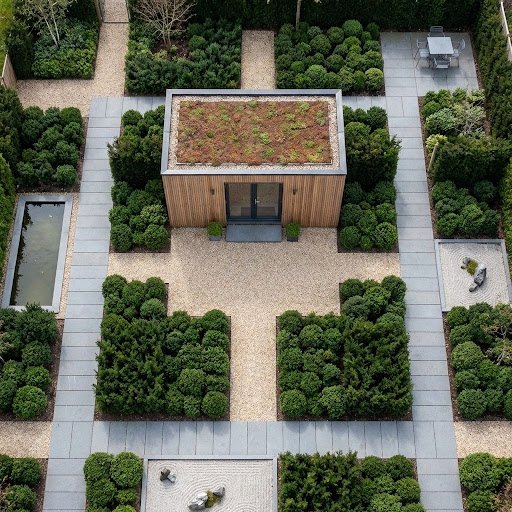
The Botanical Bento takes its conceptual cue from the structured elegance of the traditional Japanese bento box. Just as a bento box meticulously divides a meal into separate, distinct, and purpose-driven compartments (rice, protein, pickles, vegetables), this philosophy treats the garden not as a single, sprawling landscape, but as a series of high-function, visually harmonious, and psychologically distinct “compartments” or “zones.”
For the remote professional, the Botanical Bento represents the final, most sophisticated evolution of the “Work-Life Divide.” It recognizes that the mental transition from “home” to “work” cannot be left to chance; it must be engineered into the very fabric of the commute. The philosophy mandates a strict physical and visual zoning of the garden into three critical and interwoven areas, each serving a unique function in the commuter’s daily routine:1. The Intake (The Path to Focus)
Definition: This zone is the functional and psychological pathway that guides the commuter from the main house door to the garden office pod.
Function: The Intake is designed to facilitate a mental ‘download’ of personal life and an ‘upload’ of professional focus. The design should be deliberate, not meandering. It utilizes linear hardscaping—perhaps reclaimed timber sleepers or clean-cut slate pavers—to create a sense of forward momentum.
Botanical Element: Planting in this zone should be low-maintenance and repetitive (e.g., uniform grasses or clipped evergreens) to minimize distraction, acting as a visual ‘synthesis’ that prepares the mind for the coming workday. The sound of running water, however subtle, can act as a crucial sonic cue, washing away the remnants of the morning routine.2. The Buffer (The Office Extension)
Definition: This is the most crucial architectural element, consisting of the immediate 2-metre radius surrounding the garden office pod.
Function: The Buffer serves to dramatically expand the perceived interior space of the office. It blurs the line between indoor and outdoor, making a standard 10-square-metre pod feel exponentially larger—often achieving the psychological impact of a 40-square-metre workspace.
Architectural Technique: The Unified Visual Plane: The key to success here is using identical materials inside the office and on the Buffer’s decking. If the office interior features premium grey porcelain tiling, that exact same tiling must extend seamlessly into the outdoor Buffer zone. This creates an uninterrupted visual surface that tricks the eye into seeing the Buffer as an extension of the room itself, particularly when large bi-fold doors are open. Planting in this zone must be highly architectural—think structured, modern pots with sharp, sculptural plants like agaves or phormiums—to reinforce the zone’s status as an extension of the working environment.3. The Sanctuary (The Social/Rest Zone)
Definition: This zone is the designated area for rest, social interaction, and non-work-related activity, located away from the immediate proximity of The Buffer.
Function: The Sanctuary is where the garden commuter actively ‘switches off.’ It is essential for preventing the ‘spillage’ of work stress into the home environment. It is the designated location for lunch breaks, family evening meals, or simply enjoying a coffee without the sight of the computer screen.
Botanical Element: In stark contrast to the linear, clean design of The Intake and The Buffer, The Sanctuary should embrace lush, sensory, and comforting planting. Think soft textures, fragrant herbs (lavender, mint), gentle colours, and the inclusion of soft seating, perhaps a hammock or a comfortable, deep-seated sofa. It is the compartment for relaxation, designed to be visually and functionally separate from the rigour of The Buffer, ensuring that when you finish your day, you truly leave the office behind.
February “Bento-Zoning” Checklist
- The Intake (Sensory Transition): Plant Sarcococca confusa (Sweet Box) now. The intense fragrance provides a “Neural Reset” during your 15-step commute.
- The Buffer (Climate Shield): Use Pleached Hornbeam grids. In February, their skeletal form provides a structural privacy screen; in May, their leaves will act as a natural acoustic dampener for the “Mower Wars.”
- The Sanctuary (The Culinary Suite): Plan your “Foodscaping” layout. The 2026 luxury standard is the “Argentinian Grill” integrated into the garden wall, allowing for “Desk-to-Dinner” transitions in under five minutes.
February Planting: The ‘Long-View’ Perennials
| Plant | Role in the Bento | Why Now? |
| Euphorbia characias | Architectural structure. | Provides “Acid Green” pop against the Feb frost. |
| Helleborus (Lenten Rose) | Early pollinator food. | Blooms now; visible from your office window. |
| Ophiopogon (Black Mondo) | “Bento” edging. | Defines the sharp lines between work and rest zones. |
Conclusion: A beautiful garden is no longer enough. In 2026, your garden must be an “Immersive Ecosystem” that actively manages your stress, your privacy, and your carbon footprint.